

Website usability sounds like a tech buzzword but it shapes every click and scroll people make online. Get this. Over half of mobile users will abandon a site if it takes longer than three seconds to load. You might assume flashy graphics and endless features are the secret to user loyalty but it is actually simple, clear, and intuitive design that turns visitors into customers.
Table of Contents
- What Is Website Usability And Its Key Components?
- Why Improving Website Usability Matters For Local Businesses
- How Website Usability Affects Customer Behavior And SEO
- Key Concepts In Website Usability: Accessibility And Navigation
Quick Summary
| Takeaway | Explanation |
|---|---|
| Website usability enhances customer interaction | An intuitive design improves how users navigate a site, leading to better engagement and satisfaction. |
| Load times significantly affect conversions | A website that loads slowly can lead to lost customers; faster sites boost conversion rates. |
| Clear navigation is essential for usability | Users need logical pathways; intuitive menus help them find information quickly and easily. |
| Accessibility broadens user reach | Designing for diverse abilities ensures that all individuals can effectively interact with your site. |
| SEO performance improves with usability | Excellent user experiences contribute to better search engine rankings, increasing visibility and traffic. |
What is Website Usability and Its Key Components?
Website usability represents a critical framework for digital success, determining how effectively users interact with and navigate online platforms. At its core, usability measures the user experience by evaluating how easily visitors can understand, explore, and accomplish their objectives on a website. Comprehensive usability research reveals that successful websites prioritize intuitive design, clear navigation, and seamless interaction.
Understanding the Core Elements
Website usability encompasses several fundamental components that directly impact user engagement and satisfaction. The key elements include:
- Learnability: How quickly users can understand and navigate the website’s interface
- Efficiency: The speed and ease with which users complete desired tasks
- Memorability: How easily users can return and reuse the website after initial interaction
- Error Prevention: Minimizing user mistakes through intuitive design and clear instructions
Why Usability Matters for Local Businesses
For local businesses, website usability is not just a technical consideration but a critical competitive advantage. An easily navigable website can transform casual visitors into committed customers by reducing friction and creating positive user experiences. When users find information quickly and effortlessly, they are more likely to engage with your brand, make purchases, and recommend your services.
Local businesses can enhance their website usability by focusing on clear information architecture, responsive design, and intuitive user pathways. Learn more about optimizing your site’s architecture to create a more engaging online presence that drives customer conversion and retention.
Ultimately, website usability is about creating digital experiences that feel natural, efficient, and enjoyable for users. By understanding and implementing these principles, local businesses can develop websites that not only look professional but also function as powerful tools for customer engagement and business growth.
Below is a breakdown of the key components of website usability to help clarify their individual contributions to overall user experience.
| Component | Description |
|---|---|
| Learnability | How quickly users can understand and navigate the website interface |
| Efficiency | The speed and ease with which users complete desired tasks |
| Memorability | How easily users can return and reuse the website after initial interaction |
| Error Prevention | Minimizing user mistakes through intuitive design and clear instructions |

Why Improving Website Usability Matters for Local Businesses
Improving website usability is no longer optional for local businesses but a critical strategy for survival and growth in the digital marketplace. Research from Google demonstrates that 53% of mobile users abandon websites that take longer than three seconds to load, highlighting the profound impact of user experience on business performance.
The Economic Impact of User Experience
Website usability directly translates into tangible economic outcomes for local businesses.
Poor user experience can result in significant revenue loss, with studies showing that every additional second of load time can decrease conversion rates by up to 7%. The key economic implications include:
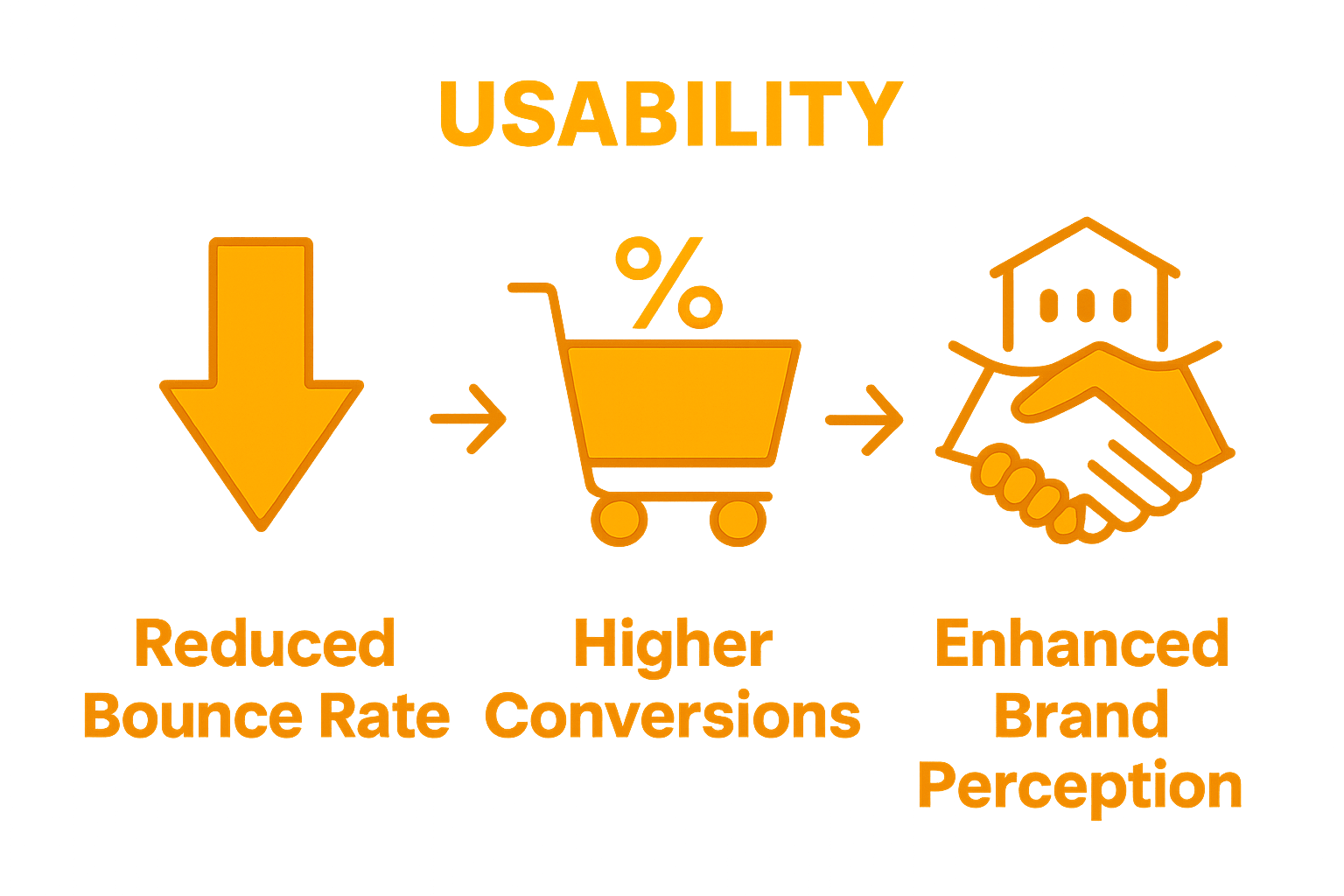
- Reduced Bounce Rates: Intuitive websites keep potential customers engaged
- Higher Conversion Potential: Easy navigation increases likelihood of purchase
- Enhanced Brand Perception: Professional, smooth websites build customer trust
Competitive Advantage in Local Markets
Local businesses compete not just on products or services, but on digital accessibility and user experience. An optimized website serves as a virtual storefront, welcoming customers and guiding them seamlessly through their purchasing journey. Explore advanced SEO strategies to further amplify your digital presence and user engagement.
Moreover, search engines like Google increasingly prioritize user experience in their ranking algorithms. Websites with superior usability receive better search rankings, more visibility, and ultimately, more potential customer interactions. This means investing in website usability is not just about user satisfaction, but also about improving your business’s overall digital discoverability and competitiveness.
The following table summarizes how different aspects of website usability influence business outcomes and digital performance for local businesses.
| Usability Aspect | Impact on Customer Behavior | Impact on Business Performance |
|---|---|---|
| Load Time | Users may abandon slow-loading sites | Faster sites increase conversions and reduce revenue loss |
| Clear Navigation | Users find information easily | Increases engagement and likelihood of purchases |
| Accessibility | All users can interact effectively | Broadens user reach and enhances brand perception |
| Mobile Responsiveness | Easy use on any device | Higher search rankings, more organic traffic, and better visibility |
| Error Prevention | Fewer user frustrations | Builds trust and reduces customer support needs |
How Website Usability Affects Customer Behavior and SEO
Website usability and search engine optimization are intrinsically linked, creating a powerful dynamic that directly influences customer engagement and digital performance. Google’s search algorithms increasingly prioritize user experience as a critical ranking factor, transforming how businesses approach their online presence.
User Experience and Search Engine Performance
Search engines have evolved to measure and reward websites that provide exceptional user experiences. Key performance metrics that demonstrate this relationship include:
- Bounce Rate: Lower bounce rates signal content relevance and user engagement
- Time on Site: Longer user interactions indicate valuable and interesting content
- Mobile Responsiveness: Websites optimized for mobile devices receive higher search rankings
Behavioral Signals That Impact Digital Visibility
Customer interactions with a website send powerful signals to search engines about its quality and relevance. When users find content easily, navigate smoothly, and complete desired actions, search algorithms interpret these behaviors as indicators of a high quality website. Learn more about advanced SEO strategies to leverage these behavioral insights.
Moreover, user behavior metrics like click through rates, pages per session, and conversion rates directly influence search engine rankings. A website that provides an intuitive, seamless experience not only satisfies customers but also signals to search engines that it deserves higher visibility in search results. This symbiotic relationship between usability and SEO means that improving website design and functionality is no longer optional but a critical strategy for digital success.
Key Concepts in Website Usability: Accessibility and Navigation
Website usability hinges on two critical pillars: accessibility and navigation. These fundamental concepts determine how effectively users interact with digital platforms, ultimately defining the success of online experiences. Comprehensive accessibility research emphasizes that inclusive design is not just a technical requirement but a strategic approach to creating universally functional websites.
Understanding Digital Accessibility
Digital accessibility ensures that websites can be used by individuals with diverse abilities and technological constraints. This comprehensive approach involves designing digital environments that accommodate various user needs, including:
- Visual Accessibility: Providing alternative text for images, high color contrast
- Keyboard Navigation: Enabling full website interaction without mouse usage
- Screen Reader Compatibility: Ensuring content can be interpreted by assistive technologies
Navigation as a User Experience Foundation
Effective website navigation serves as the primary mechanism for user orientation and interaction. A well-designed navigation system guides users intuitively, reducing cognitive load and improving overall engagement. The core principles of exceptional website navigation include:
- Clear Menu Structures: Logical, hierarchical organization of website sections
- Consistent Design Patterns: Uniform navigation across different pages
- Intuitive User Pathways: Minimizing clicks required to reach desired information
Learn more about optimizing site architecture to create seamless user experiences that drive engagement and conversions. By prioritizing accessibility and navigation, local businesses can create digital platforms that not only meet technical standards but also provide meaningful, inclusive interactions for all users.
Ready to Transform Your Local Business with Exceptional Website Usability?
Struggling with customers leaving your site too soon or not finding what they need? Many local businesses face these exact challenges. If confusing navigation, slow load times, or lack of mobile-friendly design are holding your business back, you are not alone. The article above highlights that poor usability can cause lost revenue and lower search visibility—which means fewer people find your business online. That pain is real, but there is a proven way forward. For local business owners who want to rise above the competition, focusing on usability is no longer a nice-to-have. It is essential for growth in today’s digital world. Dive deeper into actionable strategies with our SEO insights designed for growing local visibility.
If you are ready to see measurable improvements in user experience and organic traffic, now is the time to take action. With Juiced Digital, you get high-performance site audits, cutting-edge digital marketing strategies, and step-by-step guidance tailored to local businesses. Book your consultation today and discover how smarter usability can help your business reach more customers, drive more sales, and outperform your competition.
Frequently Asked Questions
What are the key components of website usability?
Website usability includes learnability, efficiency, memorability, and error prevention. These components ensure that users can easily navigate and accomplish their tasks on your website.
Why is website usability important for local businesses?
Website usability is crucial for local businesses as it enhances user experience, which can lead to increased customer engagement, higher conversion rates, and improved brand perception. An easily navigable website helps transform visitors into loyal customers.
How does website usability impact search engine rankings?
Website usability affects search engine rankings because search engines prioritize user experience. Metrics like bounce rate, time on site, and mobile responsiveness play a significant role in how well a website ranks in search results.
What are some tips to improve website usability?
To improve website usability, focus on creating clear navigation, responsive design, and intuitive user pathways. Additionally, ensure your website is accessible to all users by incorporating features such as alternative text for images and keyboard navigation.
Recommended
- Site Architecture for SEO: Boost Local and Cannabis Stores 2025 – Digital PR Expert | Digital Marketing & Search Leaders
- Understanding SEO and Accessibility for Local Businesses – Digital PR Expert | Digital Marketing & Search Leaders
- SEO Mistakes to Avoid for Local Business Owners in 2025 – Digital PR Expert | Digital Marketing & Search Leaders
- Top 10 SEO Strategies to Boost Organic Traffic in 2024 – Digital PR Expert | Digital Marketing & Search Leaders