

Every business owner wants to see their website at the top of search results. Yet more than 70 percent of small business websites have critical SEO errors that block their path to higher rankings. Most assume a few quick fixes will solve everything, but a true SEO transformation starts with a deep look at what is actually holding your site back. This fresh approach turns wasted potential into real online growth.
Table of Contents
- Step 1: Analyze Your Current SEO Strategy
- Step 2: Identify Common SEO Mistakes
- Step 3: Optimize Your Website Structure
- Step 4: Implement Effective Keyword Strategies
- Step 5: Monitor and Adjust Your SEO Efforts
Quick Summary
| Key Point | Explanation |
|---|---|
| 1. Conduct a thorough SEO audit | Evaluate your current SEO performance using tools like Google Search Console and Google Analytics to identify strengths and weaknesses. |
| 2. Rectify common SEO mistakes | Focus on avoiding issues like keyword misalignment and inconsistent local business information to improve search visibility. |
| 3. Optimize website structure for SEO | Ensure your website has a clear, logical URL structure that enhances user experience and search engine crawling. |
| 4. Develop a strategic keyword approach | Use targeted, intent-focused keywords that reflect your local offerings to connect with potential customers. |
| 5. Monitor SEO performance regularly | Establish a routine to review SEO metrics, allowing for immediate adjustments based on performance insights and user behavior. |
Step 1: Analyze Your Current SEO Strategy
Successful SEO begins with a comprehensive audit of your current digital performance. Before implementing any new strategies, you need to understand exactly where your online presence stands. This critical first step involves diving deep into your website’s current search engine optimization landscape to identify strengths, weaknesses, and opportunities for improvement.
Start by conducting a thorough website performance analysis using powerful diagnostic tools. Google Search Console and Google Analytics are essential resources that provide comprehensive insights into your site’s current search performance. These platforms reveal critical metrics like organic search traffic, keyword rankings, click-through rates, and user engagement patterns. Pay special attention to which pages are performing well and which are underperforming. Look for pages with high impressions but low click-through rates, as these represent prime optimization opportunities.
Next, perform a technical SEO assessment that examines your website’s foundational infrastructure. Check your site’s loading speed, mobile responsiveness, and overall technical health. Slow-loading pages or poor mobile experiences can dramatically impact your search rankings. Use tools like PageSpeed Insights to generate detailed reports about your website’s performance across different devices. You’ll want to identify and resolve issues such as:
- Broken internal links
- Slow page load times
- Unoptimized image sizes
- Missing meta descriptions
- Improper header tag structures
As you analyze your current SEO strategy, uncover more advanced optimization techniques that can elevate your digital presence. Remember that SEO is an ongoing process of refinement. Your initial audit serves as a baseline measurement, helping you track progress and make data-driven decisions about future optimization efforts. The goal isn’t perfection but continuous, incremental improvement that moves your website closer to top search result positions.
Here is an overview table summarizing each step of the SEO improvement process for local business owners in 2025.
| Step | Main Focus | Key Tools/Resources | Outcome |
|---|---|---|---|
| 1. Analyze Current SEO | SEO audit and performance analysis | Google Search Console, Google Analytics, PageSpeed Insights | Detailed SEO report, strengths & weaknesses identified |
| 2. Identify Mistakes | Find and document common SEO errors | Google Keyword Planner, SEMrush | Catalog of issues and solutions plan |
| 3. Optimize Structure | Improve website architecture and navigation | Internal linking, descriptive URLs | User- and SEO-friendly website organization |
| 4. Implement Keywords | Develop targeted keyword strategies | Keyword research tools | Strategic keyword portfolio for local targeting |
| 5. Monitor & Adjust | Continuous SEO performance tracking | Analytics tools, regular reviews | Measurable improvements and adaptation over time |
Successful completion of this step means having a clear, documented understanding of your current SEO performance. You should have generated a comprehensive report detailing your website’s strengths and areas requiring immediate attention. This foundational analysis will guide every subsequent optimization strategy, ensuring your efforts are precisely tailored to your specific digital landscape.
Step 2: Identify Common SEO Mistakes
Recognizing and addressing SEO mistakes is crucial for local business owners seeking to improve their online visibility. Many businesses inadvertently sabotage their search engine performance through common errors that can significantly impact their digital presence. Understanding these pitfalls is the first step toward creating a more effective and strategic approach to search engine optimization.
Keyword misalignment represents one of the most critical mistakes local businesses make. Instead of stuffing content with random keywords, focus on developing a strategic approach that matches your actual business offerings and customer search intent. This means conducting thorough keyword research that reflects how potential customers actually search for your products or services. Use tools like Google Keyword Planner or SEMrush to identify relevant, high-intent keywords that align closely with your local business offerings. Pay special attention to long-tail keywords that capture specific local search queries, which often have less competition and higher conversion potential.
Another significant area of concern involves local business listings and citations. Many business owners fail to maintain consistent and accurate information across different online platforms. learn how to optimize your local search visibility by ensuring your Name, Address, and Phone number (NAP) remain identical across all online directories. Inconsistent information can confuse search engines and potential customers, ultimately harming your local search rankings. Common citation errors include:
- Variations in business name spelling
- Outdated contact information
- Inconsistent address formatting
- Missing or incomplete business descriptions
To verify your progress in identifying SEO mistakes, create a comprehensive audit document that catalogs all discovered issues. This document should include specific errors, their potential impact on your search performance, and a structured plan for addressing each identified problem.
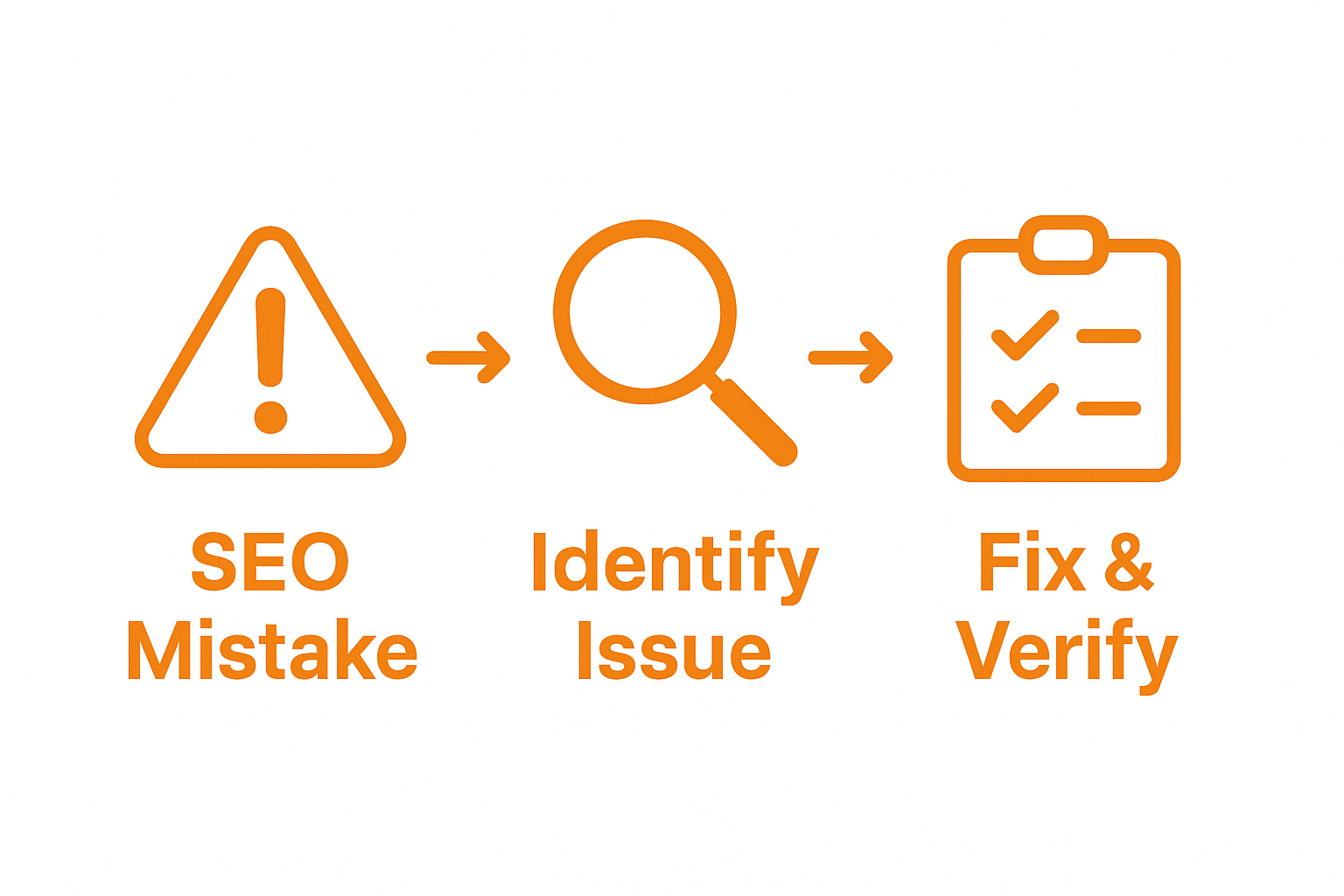 Successful completion means having a clear, actionable roadmap for improving your website’s search engine optimization, with each mistake transformed into an opportunity for strategic improvement. Remember that SEO is an ongoing process of refinement and adaptation, requiring consistent attention and strategic thinking.
Step 3: Optimize Your Website Structure
Optimizing your website structure is a critical step in creating a search engine friendly digital presence that attracts and retains potential customers. A well-designed website architecture not only improves user experience but also signals to search engines that your content is valuable, structured, and easily navigable. Think of your website structure as a roadmap that helps both users and search engine crawling bots understand and explore your digital landscape.
URL architecture plays a fundamental role in your SEO strategy. Create clean, descriptive URLs that clearly communicate the content of each page. Avoid complex strings of numbers or random characters. Instead, develop a logical hierarchy that reflects your business categories and services. For local businesses, this means incorporating location-specific keywords and creating intuitive navigation paths. For example, a local bakery might structure URLs like “www.yourbakery.com/locations/downtown” or “www.yourbakery.com/services/wedding-cakes”. These structured URLs not only improve user understanding but also provide additional context for search engine algorithms.
Discover advanced techniques for creating SEO-friendly site architecture that can dramatically improve your online visibility. Focus on developing a flat website structure that allows users to reach any page within three clicks from the homepage. This approach reduces complexity and helps search engines more efficiently index your content. Pay special attention to internal linking, which serves multiple purposes:
- Distributes page authority across your website
- Helps users discover related content
- Provides clear pathways for search engine crawling
- Reinforces topical relevance and site hierarchy
Successful website structure optimization means creating a seamless, intuitive experience that serves both human visitors and search engine algorithms. Your verification checklist should include confirming that each page is accessible, URLs are descriptive and meaningful, and navigation feels natural and straightforward.
Below is a checklist table to help you verify and complete your website structure optimization process.
| Checklist Item | Description | Completion Status |
|---|---|---|
| Ensure all pages are accessible | Confirm no broken links or inaccessible URLs | [ ] |
| Use descriptive, meaningful URLs | URLs should clearly indicate the page content and use relevant keywords | [ ] |
| Maintain logical navigation | Navigation should feel natural and allow users to reach any page in three clicks | [ ] |
| Implement internal linking | Links should guide users to related content and help distribute page authority | [ ] |
| Confirm mobile responsiveness | Website should be optimized for mobile devices to enhance user experience | [ ] |
| Verify fast page load times | Ensure pages load quickly across devices using tools like PageSpeed Insights | [ ] |
| Review header tag structures | Make sure headers are used properly to outline content hierarchy | [ ] |

Step 4: Implement Effective Keyword Strategies
Keyword strategy represents the foundational language that connects your local business with potential customers searching online. Developing a nuanced, intelligent approach to keyword selection goes far beyond simply stuffing content with random terms. The goal is to create a strategic map that reflects how your target audience actually searches for your products and services.
Search intent becomes your primary focus when developing keyword strategies. This means understanding not just which words customers use, but the underlying motivation behind their searches. For local businesses, this requires deep insight into regional search behaviors and specific customer needs. Utilize tools like Google Keyword Planner, SEMrush, and Ahrefs to uncover long-tail keywords that capture precise user intentions. These more specific phrases often have lower competition and higher conversion potential, allowing smaller businesses to compete effectively against larger competitors.
Unlock advanced keyword research techniques that transform your SEO approach. Concentrate on developing a keyword portfolio that includes a mix of broad and specific terms. Prioritize local modifiers that include your city, neighborhood, or service area. For instance, a coffee shop might target keywords like “artisan coffee downtown [city name]” or “best espresso near [neighborhood]”. These geographically specific terms signal both relevance to search engines and direct connection with local customers.
Your keyword implementation strategy should include precise targeting across multiple content elements:
- Page titles and meta descriptions
- Headings and subheadings
- Image alt text
- Natural content integration
- URL structures
Successful keyword strategy implementation means creating a comprehensive document that tracks your chosen keywords, their search volumes, and potential user intents. Verify your progress by monitoring changes in search rankings, website traffic, and user engagement metrics. Remember that keyword strategies are not static but require continuous refinement and adaptation to shifting market dynamics and search engine algorithms.
Step 5: Monitor and Adjust Your SEO Efforts
Monitoring and adjusting your SEO strategy is an ongoing process that transforms static optimization into a dynamic, responsive approach. Like a living organism, your digital presence requires consistent attention, measurement, and strategic adaptation to remain competitive in the ever-changing search landscape.
This final step is about developing a systematic method for tracking performance, identifying opportunities, and making data-driven improvements.
Performance tracking becomes your strategic compass, guiding every optimization decision. Leverage powerful analytics tools like Google Search Console and Google Analytics to gain deep insights into your website’s search performance. These platforms provide comprehensive data on critical metrics such as organic search traffic, keyword rankings, click-through rates, and user engagement patterns. Pay close attention to which pages are driving the most traffic, which keywords are generating meaningful interactions, and where potential bottlenecks in user experience might exist. Explore advanced performance tracking techniques that can elevate your understanding of digital marketing dynamics.
Establishing a consistent monitoring routine is crucial for maintaining and improving your SEO performance. Set up monthly or quarterly review sessions where you comprehensively analyze your website’s metrics. During these reviews, examine not just raw numbers, but the stories they tell about user behaviors and search engine perceptions. Look for emerging trends, sudden changes in performance, and potential areas of improvement. Your monitoring should extend beyond basic traffic numbers to include:
- Conversion rates from organic search
- Average time spent on key pages
- Bounce rates for different content types
- Ranking changes for target keywords
- Shifts in user demographic interactions
Successful SEO monitoring means creating a living document that tracks your progress, captures insights, and outlines specific action steps for continuous improvement. Your verification process should include documenting performance changes, identifying root causes for both positive and negative shifts, and developing a clear roadmap for future optimizations. Remember that SEO is not a destination but a continuous journey of refinement, where each adjustment brings you closer to your ultimate goal of increased visibility and meaningful user engagement.
Ready to Eliminate Costly SEO Mistakes and Accelerate Your Local Growth?
If you are feeling frustrated by missed online opportunities or slow search rankings, you are not alone. Many local business owners struggle with technical SEO issues, confusing site structure, or outdated keyword tactics just like those detailed in this article. These mistakes do more than just hurt rankings—they waste your investment in marketing and hold your business back from true growth. Visit our SEO solutions page to see how proven strategies make a difference.
Partner with Juiced Digital to transform uncertainty into measurable results. Our experienced team delivers local SEO optimization, technical audits, and high-authority link building that address the exact pain points discussed here. These are the same approaches trusted by ambitious brands across North America. Start building your best digital presence today at Juiced Digital. Act now and give your business the chance it deserves to shine in the rankings.
Frequently Asked Questions
What are common SEO mistakes local businesses make?
Local businesses often make mistakes such as keyword misalignment, inconsistent local business listings, neglecting technical SEO factors, and poor website structure. Identifying and correcting these issues can significantly improve online visibility.
How can I perform an SEO audit for my local business?
To conduct an SEO audit, use tools like Google Search Console and Google Analytics to analyze website performance. Look for technical issues, keyword rankings, and user engagement metrics to identify strengths and areas for improvement.
Why is keyword research important for local SEO?
Keyword research is crucial because it helps align your website’s content with the actual search behaviors of potential customers. By targeting relevant, high-intent keywords, you can improve your chances of attracting local traffic to your business.
What steps can I take to optimize my website structure for SEO?
To optimize your website structure, create clean, descriptive URLs, maintain intuitive navigation, and ensure that important pages are easily accessible. Implementing a flat site architecture and internal linking can also enhance user experience and SEO performance.