

ADA compliance is changing the way businesses connect online, making digital spaces accessible for everyone. Nearly 61 million adults in the United States have a disability, which means every site update is reaching a massive audience many companies still overlook. Most think accessibility is just a legal checkbox, but the real surprise is how much it can boost your bottom line and set you apart in a crowded market.
Table of Contents
- What Is ADA Compliance And Why Is It Important?
- The Legal Framework Behind ADA Compliance For Websites
- Key Principles Of Website Accessibility Under ADA
- Impact Of ADA Compliance On Business Success
- Practical Steps To Achieve ADA Compliance For Your Website
Quick Summary
| Takeaway | Explanation |
|---|---|
| ADA compliance ensures digital accessibility | Adhering to ADA guidelines makes websites navigable for users with disabilities, promoting inclusivity. |
| Legal risks stem from non-compliance | Failing to comply with ADA can lead to lawsuits, financial penalties, and damage to brand reputation. |
| Implement accessibility features systematically | Accessibility requires careful planning, including tech enhancements like alternative text and keyboard navigation compatibility. |
| Continuously monitor and improve accessibility | Maintaining ADA compliance is an ongoing effort that includes regular audits and updates to digital platforms. |
| Accessibility broadens market reach | By catering to users with disabilities, businesses can tap into a large market segment that enhances customer diversity. |
What is ADA Compliance and Why is it Important?
ADA compliance represents a critical digital standard ensuring websites are accessible to all individuals, including those with disabilities. The Americans with Disabilities Act (ADA) establishes comprehensive guidelines that mandate digital platforms provide equitable access and user experience for people with diverse abilities.
Understanding Digital Accessibility
At its core, ADA compliance means creating websites that can be effectively navigated and understood by people with various disabilities. This includes individuals with visual impairments, hearing limitations, motor skill challenges, and cognitive differences.
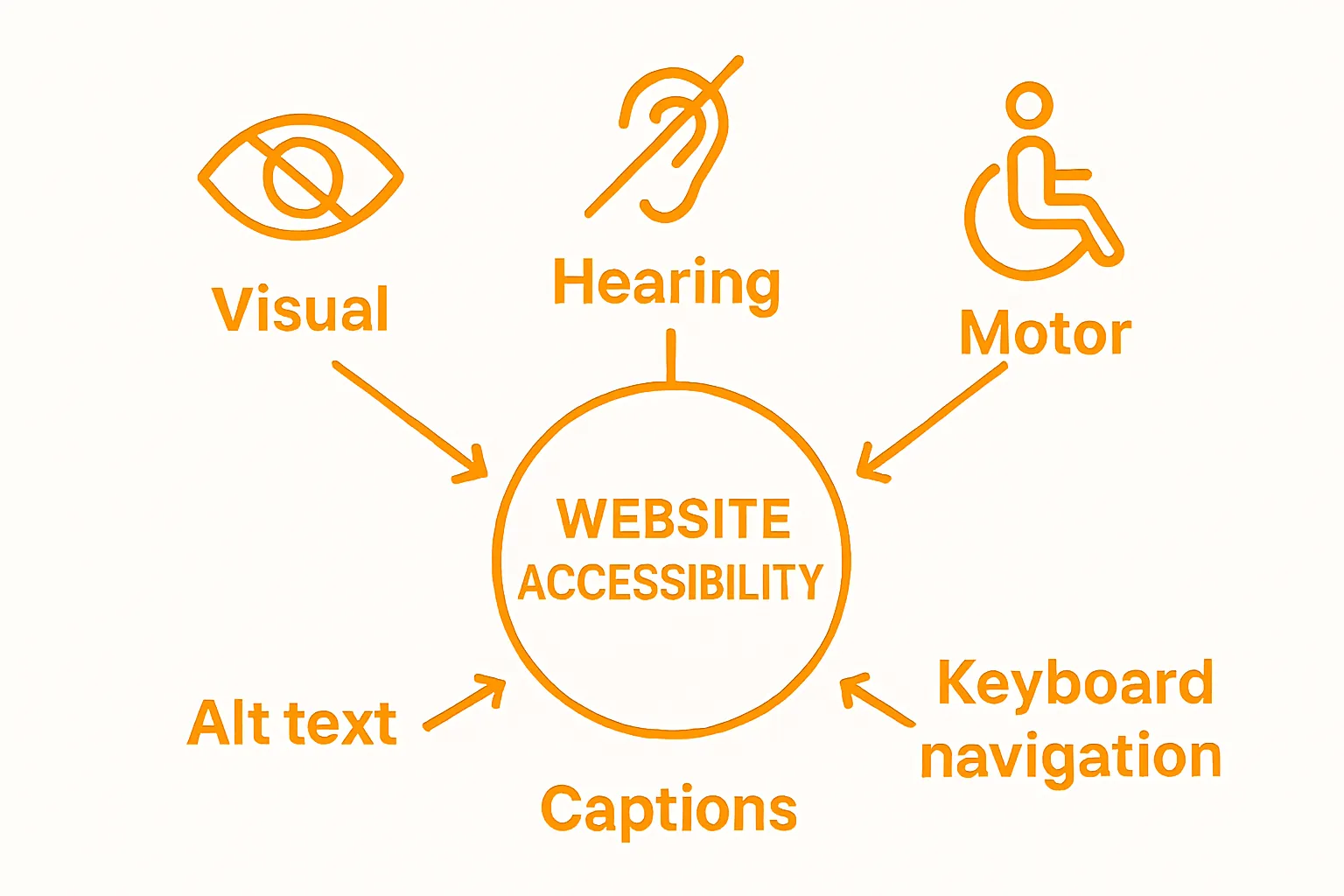 Web accessibility standards require digital platforms to be perceivable, operable, understandable, and robust for all users.
Key considerations for digital accessibility include:
- Providing alternative text for images
- Ensuring keyboard navigation functionality
- Creating color contrast that supports visual comprehension
- Implementing screen reader compatibility
- Designing clear, logical website structures
The Legal and Ethical Imperative
Website ADA compliance is not just a recommended practice but a legal requirement. Businesses that fail to make their digital platforms accessible risk significant legal consequences, including potential lawsuits and financial penalties. According to the ADA guidelines, organizations must proactively design digital experiences that welcome and support users with disabilities.
Beyond legal mandates, ADA compliance represents a profound ethical commitment to digital inclusivity. By removing digital barriers, businesses demonstrate social responsibility and create environments where every user can access information, services, and opportunities equally. This approach not only expands potential customer reach but also reflects a genuine commitment to diversity and human dignity in the digital landscape.
The Legal Framework Behind ADA Compliance for Websites
The legal framework surrounding website accessibility has evolved significantly, transforming digital spaces into environments that must accommodate all users, regardless of their physical abilities. The Americans with Disabilities Act (ADA) serves as the foundational legislation driving these critical accessibility requirements.
Origin and Scope of Digital Accessibility Laws
Originally enacted in 1990, the ADA was designed to prevent discrimination against individuals with disabilities in physical spaces. As digital technologies advanced, courts and regulatory bodies began interpreting the ADA to include websites and digital platforms. According to the proposed Websites and Software Applications Accessibility Act, digital platforms must provide equivalent access and functionality for users with diverse abilities.
Key legal considerations in digital accessibility include:
- Ensuring websites are perceivable by users with visual or auditory impairments
- Providing alternative methods of accessing digital content
- Maintaining functional equivalence for all user interactions
- Implementing robust accessibility testing protocols
- Documenting ongoing digital accessibility efforts
Consequences of Non Compliance
Businesses that neglect digital accessibility expose themselves to significant legal risks. Federal courts have increasingly ruled that websites are considered “places of public accommodation,” which means they must meet ADA standards. Potential consequences for non compliance include:
- Expensive federal lawsuits
- Substantial financial penalties
- Mandatory website remediation costs
- Potential damage to brand reputation
Learn more about accessibility standards for digital platforms and how they can protect your business from legal challenges while creating a more inclusive digital experience.
Key Principles of Website Accessibility Under ADA
Website accessibility represents a comprehensive approach to digital design that ensures all users can effectively interact with online platforms, regardless of their individual abilities or disabilities. The Americans with Disabilities Act (ADA) establishes fundamental principles that guide organizations in creating inclusive digital experiences.
Perceivability: Making Content Accessible
Perceivability means ensuring that website content can be understood by users with diverse sensory capabilities. According to the Web Content Accessibility Guidelines, this principle requires digital platforms to present information in multiple formats that can be interpreted by different user abilities.
Key strategies for enhancing perceivability include:
- Providing alternative text descriptions for images
- Offering captions and transcripts for multimedia content
- Creating color schemes with sufficient contrast
- Enabling content resizing without losing functionality
- Designing clear visual hierarchies and layouts
Operability: Enabling Comprehensive Interaction
Operability focuses on ensuring that websites can be navigated and interacted with using various input methods. This principle recognizes that users might access digital platforms through keyboards, assistive technologies, voice commands, or alternative navigation tools.
Essential operability considerations include:
- Supporting full keyboard navigation
- Providing sufficient time for users to read and interact with content
- Avoiding design elements that could trigger seizures
- Creating predictable page interactions
- Minimizing complex navigation requirements
Understandability and Robustness
The final critical principles involve making website content intellectually comprehensible and technically compatible with current and future technologies. This means creating clear, logical interfaces that work across different devices and assistive technologies, ensuring long term digital accessibility for all users.
To clarify the four core accessibility principles under the ADA and their main characteristics, the table below offers an at-a-glance overview for readers.
| Principle | Description | Key Example(s) |
|---|---|---|
| Perceivability | Information and user interface components must be presentable in ways users can perceive | Alternative text for images, captions, color contrast |
| Operability | Interface and navigation components must be usable by all | Keyboard navigation, sufficient time, seizure-safe design |
| Understandability | Content and controls must be clear and predictable | Logical layouts, clear instructions, simple language |
| Robustness | Content must be compatible with current and future technologies | Cross-device compatibility, support for assistive technologies |
Impact of ADA Compliance on Business Success
ADA compliance transcends legal requirements and emerges as a strategic business advantage that can significantly influence organizational performance, brand reputation, and market reach. Forward thinking businesses recognize digital accessibility as more than a regulatory obligation—it represents a powerful opportunity for inclusive growth and competitive differentiation.
Market Expansion and Customer Reach
Implementing robust website accessibility directly expands potential customer bases by removing digital barriers for users with disabilities. Research from the American Disabilities Association indicates that approximately 61 million adults in the United States live with a disability, representing a substantial market segment that businesses can effectively engage through thoughtful digital design.
Key market advantages of digital accessibility include:
- Reaching a broader, more diverse customer population
- Demonstrating corporate social responsibility
- Enhancing brand reputation as an inclusive organization
- Creating positive word-of-mouth marketing
- Differentiating from competitors with limited accessibility
Financial and Operational Benefits
ADA compliant websites generate measurable financial and operational advantages.
This table summarizes the business impacts of ADA compliance, distinguishing between advantages for market reach and operational/financial performance.
| Business Impact Category | Key Benefits |
|---|---|
| Market Expansion | Broader customer reach, enhanced reputation, social responsibility, competitor edge |
| Financial & Operational Gains | Lower legal risks, increased usability, improved SEO, streamlined infrastructure |
Operational benefits encompass:
- Reducing potential legal expense risks
- Improving overall website usability for all users
- Enhancing search engine optimization performance
- Creating more streamlined digital infrastructure
- Minimizing customer support intervention requirements
Explore how AI can transform digital marketing strategies to further optimize accessibility and business performance in an increasingly digital marketplace.
Practical Steps to Achieve ADA Compliance for Your Website
Transforming a website into an ADA compliant platform requires a strategic and comprehensive approach. Business owners must implement systematic processes that address digital accessibility holistically, ensuring every aspect of their online presence supports inclusive user experiences.
Comprehensive Accessibility Evaluation
According to web accessibility testing guidelines, conducting thorough accessibility audits represents the foundational step in achieving digital compliance. This involves systematically examining website elements to identify potential barriers for users with diverse abilities.
Key evaluation strategies include:
- Performing automated accessibility scanning
- Conducting manual content reviews
- Testing website functionality with assistive technologies
- Reviewing color contrast and visual design elements
- Documenting existing accessibility limitations
Technical Implementation of Accessibility Features
Successful ADA compliance demands precise technical modifications across website infrastructure. Organizations must integrate specific technical standards that enable comprehensive digital access for all users, regardless of their individual capabilities.
Essential technical considerations encompass:
- Implementing robust alternative text for images
- Ensuring keyboard navigation compatibility
- Creating logical content structure and headings
- Developing clear, descriptive link texts
- Providing transcripts and captions for multimedia content
Continuous Monitoring and Improvement
ADA compliance is not a one time achievement but an ongoing commitment to digital inclusivity. Websites must continuously adapt and refine their accessibility features, staying current with evolving technological standards and user needs.
Explore advanced SEO strategies that can complement your accessibility efforts and enhance overall digital performance. Regular accessibility audits, user feedback integration, and proactive technological updates remain critical for maintaining an inclusive digital platform.

Ready to Make Your Website Truly ADA Compliant?
If the thought of legal risks, technical complexities, or potential customer loss due to accessibility barriers makes you uneasy, you are not alone. The article highlights how crucial ADA compliance is for avoiding lawsuits, serving a wider audience, and building a reputation for inclusivity. But knowing the principles and actually implementing a compliant website that stays ahead of evolving standards are two different challenges.
Enhance Your Digital Accessibility with Juiced Digital. Our search marketing experts use cutting-edge AI, hands-on technical audits, and proven local SEO tactics so your business can achieve lasting ADA compliance, higher search visibility, and growth in even the most competitive industries.

Act now to protect your business, connect with new customers, and show your commitment to digital equality. Visit Juiced Digital today to learn how you can make your website accessible, search-friendly, and future-ready.
Frequently Asked Questions
What is ADA compliance for websites?
ADA compliance for websites refers to the adherence to the Americans with Disabilities Act guidelines, ensuring that digital platforms are accessible to individuals with disabilities. This includes making websites perceivable, operable, understandable, and robust for all users.
Why is ADA compliance important for businesses?
ADA compliance is crucial for businesses to avoid legal repercussions, as non-compliance can lead to lawsuits and financial penalties. Additionally, it demonstrates a commitment to inclusivity, enhances brand reputation, and expands customer reach by making digital content accessible to everyone.
What are key principles of website accessibility under ADA?
The key principles of website accessibility under ADA include perceivability, operability, understandability, and robustness. This means websites should present content in multiple formats, be navigable using various input methods, ensure clarity of information, and be compatible with diverse technologies.
How can businesses achieve ADA compliance for their websites?
Businesses can achieve ADA compliance by conducting comprehensive accessibility evaluations, implementing necessary technical modifications, and continuously monitoring and improving accessibility features on their websites. Regular audits and user feedback are also essential for maintaining compliance.
Recommended
- Site Architecture for SEO: Boost Local and Cannabis Stores 2025 – Digital PR Expert | Digital Marketing & Search Leaders
- Understanding SEO and Accessibility for Local Businesses – Digital PR Expert | Digital Marketing & Search Leaders
- Top 10 SEO Strategies to Boost Organic Traffic in 2024 – Digital PR Expert | Digital Marketing & Search Leaders
- Understanding Improving Website Usability for Local Businesses – Digital PR Expert | Digital Marketing & Search Leaders
- Effective Website Design: Key Principles and Proven Strategies 2025