
In today’s competitive market, learning how to consistently generate business leads isn’t just an advantage, it’s essential for survival and growth. But with countless channels and tactics available, where should you focus your efforts for maximum return on investment? Many businesses either spread themselves too thin or rely on outdated methods that no longer deliver results.
This guide cuts through the noise. We’ve compiled 10 proven, channel-specific strategies that work for a diverse range of businesses, from local service providers in Vancouver to global e-commerce brands and even those in regulated sectors like wellness and cannabis. Instead of generic advice, you will find a clear blueprint for building a powerful lead pipeline.
Inside this playbook, you’ll discover how to:
- Capture organic demand using advanced content marketing and Local SEO.
- Drive immediate traffic with AI-optimised paid advertising campaigns.
- Nurture relationships and convert prospects through sophisticated email marketing.
- Maximise website performance with targeted conversion rate optimisation (CRO).
- Build authority and trust through strategic digital PR and partnerships.
Each strategy is broken down into actionable steps, complete with real-world examples and expert insights you need to build a predictable, scalable lead generation engine. Whether you’re a holistic clinic in British Columbia or an online retailer targeting North America, these are the methods that will turn visibility into measurable revenue. This is your comprehensive resource to generate business leads that fuel sustainable growth.
1. Content Marketing & SEO-Driven Lead Generation
Content marketing is the strategic practice of creating and distributing valuable, relevant content to attract and retain a clearly defined audience. When combined with Search Engine Optimization (SEO), it becomes a powerful engine to generate business leads organically. Instead of interrupting potential customers with ads, you pull them in by providing answers and solutions right when they are searching for them. This method establishes your brand as a credible authority, building trust long before a sales conversation ever begins.

This inbound approach works because it aligns with modern consumer behaviour. By creating high-quality blog posts, in-depth guides, case studies, and resource hubs targeting specific keywords, you ensure your business appears in search results. Visibility in search engines is critical, as it depends on how effectively a web crawler can index your site’s content. The goal is to capture high-intent traffic and convert visitors into leads through well-placed calls-to-action (CTAs), such as newsletter sign-ups or downloadable resources.
How to Implement This Strategy
- Conduct Keyword Research: Use tools like Ahrefs or Semrush to find keywords your target audience is searching for. Focus on “long-tail” keywords (e.g., “best CBD oil for anxiety in Canada”) as they often indicate higher purchase intent.
- Create High-Value Content: Develop content that thoroughly answers the searcher’s query. A wellness clinic could write a comprehensive guide on the benefits of functional mushrooms, while an e-commerce brand might create a detailed buyer’s guide comparing two popular products.
- Optimize for On-Page SEO: Ensure every piece of content has an optimized title tag, meta description, and uses relevant headers (H2, H3) to structure the information for both users and search engines.
- Integrate Lead Capture: Embed relevant CTAs within your content. Offer a free e-book, a checklist, or a newsletter subscription in exchange for an email address.
- Monitor and Refresh: Use Google Search Console and Google Analytics 4 (GA4) to track performance. Periodically update older posts with new information to maintain their search rankings and relevance.
2. Local SEO & Google Business Profile Optimization
Local Search Engine Optimization (SEO) is a specialized strategy designed to enhance your online visibility within a specific geographic area. For businesses with physical locations or those serving a local clientele, it is a non-negotiable tactic to generate business leads. By optimizing your digital presence for local search queries, particularly “near me” searches, you connect with high-intent customers actively seeking your products or services at the very moment they need them.
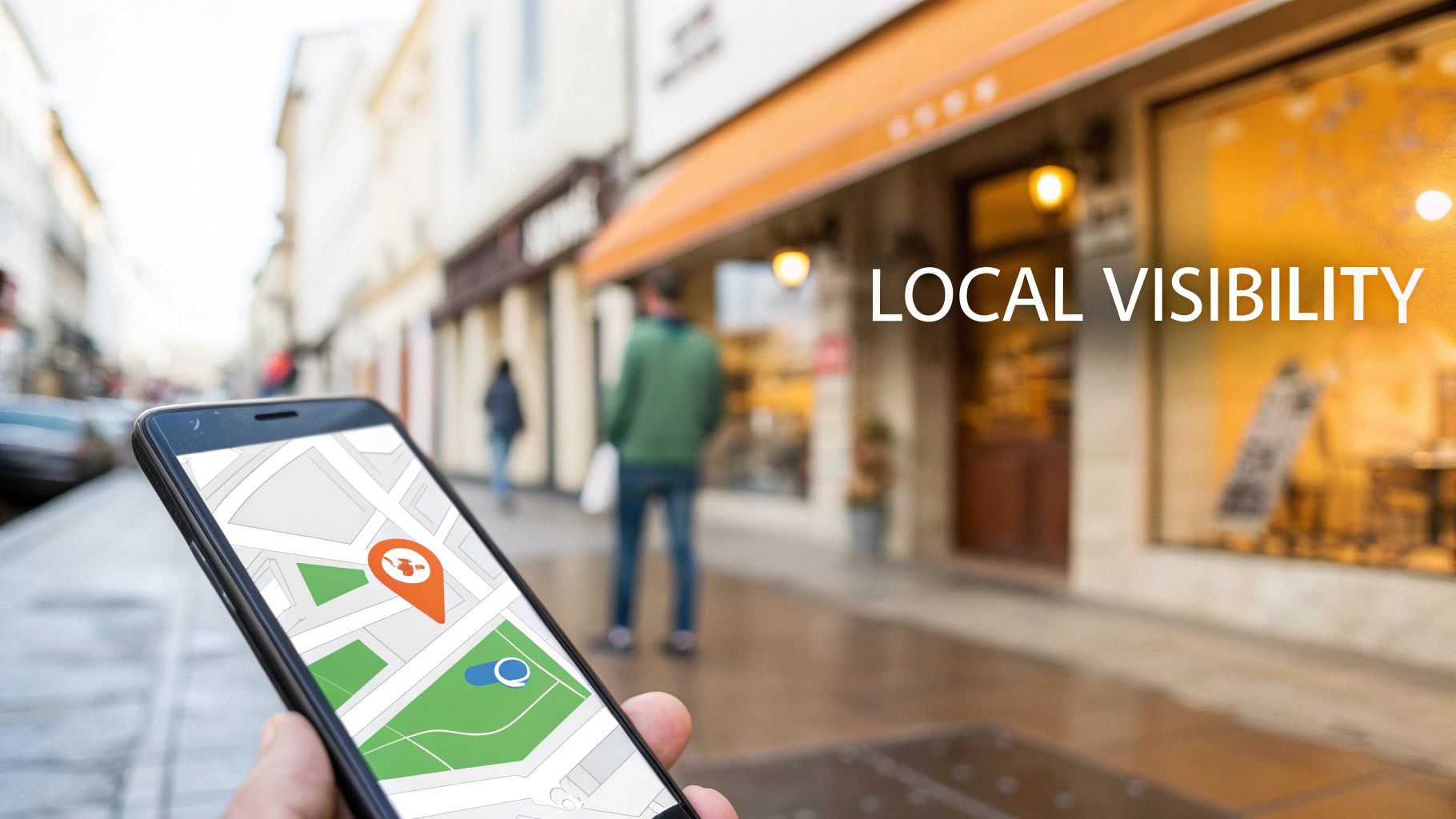
This approach centres on your Google Business Profile (GBP), which acts as a digital storefront in Google Search and Maps. A well-managed profile, combined with positive reviews and accurate business information across the web, builds credibility and trust. This allows a Vancouver wellness clinic to dominate “holistic health near me” searches or a local cannabis retailer to appear prominently in the coveted “local pack” results, driving foot traffic and direct inquiries.
How to Implement This Strategy
- Claim and Fully Optimize Your GBP: Complete every section of your Google Business Profile. Use high-quality photos, write detailed service descriptions, add your business hours, and select all relevant categories.
- Encourage and Manage Reviews: Proactively ask satisfied clients for reviews through follow-up emails or texts. Respond to every review, both positive and negative, to show you are engaged and value customer feedback.
- Build Local Citations: Ensure your business name, address, and phone number (NAP) are consistent across key online directories like Yelp, Apple Maps, and industry-specific sites like Healthgrades.
- Create Location-Specific Content: Develop landing pages for each service area or city you target. A health coach could create a page titled “Wellness Coaching in Kitsilano” to attract highly relevant local searchers.
- Leverage GBP Features: Use Google Posts to share updates, offers, or events. Utilize the Q&A feature to answer common customer questions before they even have to ask. Adding a map to your website can also improve local signals, and you can learn how to embed a Google Map on your website here.
3. Paid Search Advertising (Google Ads & AI Optimization)
Paid search advertising places your business directly in front of prospects who are actively searching for your products or services on platforms like Google. Unlike organic methods that take time to build momentum, this strategy provides immediate visibility, allowing you to generate business leads from high-intent searchers right away. By leveraging AI-powered tools within platforms such as Google Ads, you can automate bidding, optimize ad copy, and precisely target audiences, ensuring your budget is spent efficiently to capture qualified traffic.
This direct-response approach is powerful because it intercepts customers at the exact moment of need. A Vancouver wellness clinic can run a campaign targeting “book massage appointment now,” or a functional mushroom brand can capture “buy lion’s mane online” searches. The key is to bid on keywords that signal strong commercial intent. You can learn more about how to budget for these campaigns by understanding the costs associated with Google advertising. This method delivers measurable results, complementing long-term SEO efforts with a consistent and predictable lead flow.
How to Implement This Strategy
- Leverage AI-Powered Bidding: Use Google’s Smart Bidding strategies like Target CPA (Cost Per Acquisition) or Target ROAS (Return On Ad Spend). These algorithms automatically adjust bids in real-time to maximize conversions based on your goals.
- Segment Campaigns by Intent: Create separate campaigns for different stages of the buyer’s journey. For example, group high-intent keywords like “buy now” or “for sale” separately from research-focused keywords like “reviews” or “how to.”
- Create Tailored Landing Pages: Ensure the landing page a user visits perfectly matches the promise made in your ad. If your ad promotes a specific product, the landing page should feature that product prominently, not a generic homepage.
- Implement Robust Conversion Tracking: Set up precise conversion tracking using Google Analytics 4 (GA4) and Google Tag Manager. This allows you to accurately measure which keywords and ads are driving leads and sales.
- Continuously Test and Refine: Regularly A/B test ad copy, headlines, and calls-to-action to improve click-through and conversion rates. Monitor the Search Terms Report to identify new keywords and add irrelevant terms as negative keywords to prevent wasted spend.
4. Email Marketing & Lead Nurturing Sequences
Email marketing is the cornerstone of converting captured interest into tangible revenue. It involves building a list of prospects and nurturing them through automated, personalized email sequences. By delivering timely and relevant content directly to their inbox, you can guide leads through the buyer’s journey, transforming a cold prospect into a loyal customer. This systematic approach allows you to generate business leads at scale while maintaining a personal touch.
Unlike one-off promotional blasts, lead nurturing sequences are strategic conversations that build trust over time. Once a user subscribes to your newsletter or downloads a resource, they enter a pre-defined workflow designed to educate, address pain points, and eventually present your solution. For an e-commerce brand, this could be a series of abandoned cart emails that recovers 20-30% of otherwise lost sales. For a wellness clinic, it could be an educational sequence following a “free consultation” download, positioning them as an expert and encouraging a booking.
How to Implement This Strategy
- Create a Welcome Sequence: Immediately engage new subscribers with a 3 to 5-part email series. Introduce your brand, set expectations, provide value, and end with a soft call-to-action.
- Segment Your Audience: Group your contacts by lead source, behaviour (e.g., pages visited), or interests. A functional mushroom brand could send different content to those interested in cognitive function versus immune support.
- Use Behaviour-Triggered Automations: Set up sequences that activate based on user actions. Common examples include purchase follow-ups, re-engagement campaigns for inactive subscribers, and abandoned cart reminders.
- Personalize Beyond the First Name: Use data like past purchases or product interests to make your emails highly relevant. Mentioning a specific product they viewed can significantly increase click-through rates.
- Focus on a Single, Clear CTA: Ensure each email has one primary goal, whether it’s reading a blog post, watching a video, or making a purchase. A clear call-to-action eliminates confusion and drives results.
- Monitor and Optimize: Track key metrics like open rates, click-through rates, and unsubscribe rates. Use A/B testing on subject lines and send times to continuously improve performance.
5. Conversion Rate Optimization (CRO) & Landing Page Design
Conversion Rate Optimization (CRO) is a data-driven methodology for increasing the percentage of website visitors who complete a desired action, such as filling out a form or making a purchase. Instead of spending more to attract new traffic, CRO focuses on maximizing the value of the visitors you already have. This systematic process turns your website into a more efficient engine to generate business leads by refining landing pages, calls-to-action (CTAs), and user pathways.
This approach is powerful because it uses user behaviour analysis and iterative testing to eliminate friction in the conversion process. By understanding how users interact with your site, you can make targeted improvements that have a direct impact on your bottom line. For example, a wellness clinic could simplify its booking CTA and double appointment requests, while an e-commerce brand might A/B test landing page headlines to significantly increase email signups.
How to Implement This Strategy
- Analyze High-Traffic Pages: Start with pages that get the most traffic but have low conversion rates. Use tools like heatmaps (e.g., Hotjar) to see where users click, scroll, and drop off.
- Test One Element at a Time: To get clear results, isolate variables. Test your headline, CTA button colour, form length, or main image, but only change one element per test.
- Simplify Forms: Every additional field creates friction. A common rule is that each field can reduce conversions. Challenge whether every piece of information is truly necessary at this stage.
- Craft Compelling CTAs: Make your calls-to-action visually prominent and use action-oriented language. Instead of “Submit,” try “Get My Free Quote” or “Book My Consultation Now.”
- Optimize for Mobile: Mobile user behaviour is often different from desktop. Run separate tests for your mobile experience to ensure it is seamless and optimized for smaller screens.
- Document Everything: Keep a detailed log of every test you run, including your hypothesis, the results, and what you learned. This creates an invaluable library of insights to guide future optimizations.
6. Social & Community Lead Generation (Social Media Lead Generation + Community Building)
Social and community lead generation is a dual approach that leverages public social media platforms for broad outreach and private communities for deep relationship-building. This strategy combines the visibility of platforms like LinkedIn, Instagram, and Facebook with the engagement of dedicated spaces such as Discord servers or Mighty Networks. It allows businesses to generate business leads by first capturing attention through targeted ads and organic content, then nurturing those prospects within a supportive, brand-aligned environment.

This method is powerful because it addresses the entire customer journey, from awareness to advocacy. A Vancouver wellness clinic might use Instagram ads to capture local bookings, while a B2B SaaS company uses LinkedIn Lead Gen Forms to reach decision-makers. The community aspect then provides a space for peer-to-peer support and direct brand interaction, building loyalty that converts members into high-quality, long-term customers. This creates a feedback loop where community insights inform social media content, and social media drives new members into the community.
How to Implement This Strategy
- Choose the Right Platforms: Focus your efforts where your audience is active. Use LinkedIn for B2B professionals, Instagram and Facebook for B2C and local businesses, and platforms like Discord or Mighty Networks to host enthusiast communities.
- Utilize Native Lead Forms: Reduce friction by using tools like Facebook Lead Ads or LinkedIn Lead Gen Forms. These pre-populate user information, making it incredibly simple for prospects to submit their details without leaving the platform.
- Build a Clear Community Purpose: Define the “why” behind your community. Establish clear rules and guidelines from the start. A functional mushroom brand could create a group focused on sharing recipes and health benefits, attracting engaged enthusiasts.
- Engage Authentically and Consistently: Post valuable content 3-5 times per week and respond to comments and messages promptly. In communities, foster peer-to-peer discussions, celebrate member achievements, and host exclusive Q&A sessions.
- Run Targeted Ad Campaigns: Create distinct audience segments for cold prospects, warm leads, and existing customers. Use retargeting campaigns to re-engage website visitors and lookalike audiences to find new potential customers with similar traits to your best clients.
7. Strategic Partnership & Referral Programs
Strategic partnerships and referral programs are powerful methods to generate business leads by leveraging the audience and credibility of complementary businesses. Instead of building an audience from scratch, you tap into an existing one through a mutually beneficial relationship. This approach works by creating a formal system where non-competing partners, affiliates, or influencers are incentivised to send qualified referrals your way, delivering warm leads that often convert at a higher rate due to built-in trust.
This collaborative strategy is effective because it creates a win-win scenario. Your partners earn revenue or other perks for successful referrals, while you gain access to a targeted audience you might not otherwise reach. For example, a wellness clinic can partner with local yoga studios and nutritionists, or a functional mushroom e-commerce brand can create an affiliate program for popular health and wellness podcasters. The endorsement from a trusted source acts as a powerful social proof, significantly shortening the sales cycle.
How to Implement This Strategy
- Identify Complementary Partners: Brainstorm and list 10–20 non-competing businesses, influencers, or content creators whose audience aligns with your ideal customer profile.
- Create a Clear & Attractive Offer: Design a simple referral program with a compelling incentive. A commission of 10–20% on referred sales is a common starting point for affiliate programs.
- Equip Your Partners for Success: Provide partners with a toolkit of ready-to-use promotional materials. This should include email templates, social media graphics, and unique tracking links or discount codes.
- Implement Accurate Tracking: Use affiliate management software or a reliable system with unique codes to accurately track every referral and attribute it to the correct partner.
- Automate and Communicate: Automate commission payouts to ensure partners are compensated reliably and on time. Maintain regular communication, share performance updates, and celebrate their successes to keep them engaged and motivated.
8. Webinars & Live Virtual Events
Hosting educational webinars and live virtual events is a highly effective strategy to generate business leads by showcasing expertise in real-time. This approach allows you to engage directly with a captive audience, answer their questions, and demonstrate the value of your offerings in an interactive format. By providing high-value educational content for free, you build trust and position your brand as an authority, making attendees more receptive to a sales conversation.
This method works because it taps into the principle of reciprocity. You offer valuable knowledge, and in return, prospects provide their contact information and attention. A wellness clinic could host a live Q&A with a practitioner on a specific health topic, while an e-commerce brand might run a masterclass on how to get the most out of a high-ticket product. The goal is to attract individuals with a genuine interest in your niche and convert them from passive viewers into qualified leads.
How to Implement This Strategy
- Choose a Compelling Topic: Select a topic that addresses a specific pain point or strong interest of your target audience. A functional mushroom company, for example, could present research-backed benefits of Lion’s Mane for cognitive health.
- Promote Your Event: Create a dedicated landing page with a clear value proposition and registration form. Promote the event to your email list and through targeted social media ads at least one to two weeks in advance.
- Engage and Deliver Value: Keep your webinar focused and concise, ideally between 30 and 60 minutes. Encourage interaction through polls, Q&A sessions, and chats to keep the audience engaged.
- Include a Clear Call-to-Action (CTA): End your presentation with a specific next step. This could be an invitation to book a consultation, an exclusive discount on a product, or a prompt to join a community group.
- Follow Up and Repurpose: Send a follow-up email to all registrants within 24 hours, including a link to the replay for those who couldn’t attend. Repurpose the webinar recording into blog posts, social media clips, or testimonials to extend its value.
9. Digital PR & Earned Media (Backlinks & Brand Mentions)
Digital Public Relations (PR) is the strategic process of securing high-quality online coverage from reputable publications, podcasts, and news outlets. Unlike paid advertising, this “earned media” builds authentic credibility and authority. When a trusted source mentions your brand or links to your website, it acts as a powerful third-party endorsement, driving referral traffic and helping you generate business leads from a highly engaged audience.
This approach is highly effective because it combines brand building with a direct SEO benefit. Each high-authority backlink earned from media coverage signals to search engines like Google that your website is a credible source of information, boosting your domain authority and improving organic rankings. For instance, a wellness practitioner featured in a major health publication not only gains immediate exposure but also strengthens their website’s ability to rank for competitive keywords over the long term, creating a sustainable lead generation channel.
How to Implement This Strategy
- Develop Linkable Assets: Create original research, data-driven reports, or comprehensive guides that journalists and bloggers will want to cite and link to. This content serves as a valuable resource for their own stories.
- Build a Targeted Media List: Identify 50+ publications, podcasts, and journalists relevant to your industry and audience. Focus on outlets whose readership aligns perfectly with your ideal customer profile.
- Utilise HARO (Help a Reporter Out): Monitor daily queries from journalists on platforms like HARO. Provide timely, expert responses to secure quick media mentions and backlinks.
- Pitch Newsworthy Story Angles: Develop pitches that are timely, relevant, and offer a unique perspective on current trends or industry news. Frame your expertise as a solution or a valuable insight for their audience.
- Monitor Brand Mentions: Use tools like Google Alerts or Mention.com to track when your brand is mentioned online. If an unlinked mention occurs, reach out to the publisher and politely request that they add a link back to your site.
10. Video Content & YouTube Lead Generation
Video marketing, particularly on platforms like YouTube, has evolved from a branding tool into a direct-response channel to generate business leads. By creating educational, entertaining, or solution-oriented videos, businesses can attract a highly engaged audience, build trust visually, and guide viewers towards a specific action. YouTube’s powerful search algorithm functions like Google’s, allowing you to capture prospects actively looking for answers your business can provide.
This strategy works because video is a powerful medium for demonstration and connection. A wellness practitioner can share client testimonials and health tips, while an e-commerce brand can create product unboxing videos and tutorials. The visual and auditory nature of video makes complex information digestible and helps establish a personal connection with viewers, making them more likely to convert into leads.
How to Implement This Strategy
- Optimise for Search: Conduct keyword research using tools like TubeBuddy or VidIQ to find what your audience is searching for on YouTube. Craft compelling, keyword-rich titles and detailed descriptions that include links to your landing pages.
- Create Value-Driven Content: Focus on solving problems or answering questions. A functional mushroom company could create a video explaining the benefits of different mushroom types, while a local service business could produce a tutorial related to their expertise.
- Include Clear Calls-to-Action (CTAs): Verbally mention your lead magnet during the video and use YouTube’s features like pinned comments, end screens, and info cards to link directly to your lead capture forms or website.
- Leverage YouTube Shorts: Create short, vertical videos (under 60 seconds) to tap into YouTube’s discovery algorithm. These quick, engaging clips can drive massive viewership and channel subscriptions.
- Engage with Your Community: Respond to comments promptly, especially within the first 48 hours, to signal to the algorithm that your content is engaging. Use community feedback to generate ideas for future videos.
Top 10 Lead Generation Strategies Comparison
| Approach | Complexity 🔄 | Resources & Cost ⚡ | Expected Outcomes 📊 | Time-to-Value ⚡ | Ideal Use Cases 💡 | Key Advantages ⭐ |
|---|---|---|---|---|---|---|
| Content Marketing & SEO-Driven Lead Generation | Medium–High — ongoing strategy, technical SEO | Moderate (writers, SEO tools, AI optimization) | Sustained organic traffic and qualified leads; compounding ROI | 3–6 months | E‑commerce, wellness, cannabis, brands building authority | Builds trust and long‑term low CPL; content repurposing |
| Local SEO & Google Business Profile Optimization | Medium — listings, reviews, local content | Low–Moderate (GBP, citation management, photos) | High‑intent local leads; increased foot traffic and bookings | Immediate–weeks | Brick‑and‑mortar & local service providers (Vancouver/BC) | Fast local visibility; review‑driven trust; cost‑efficient |
| Paid Search Advertising (Google Ads & AI Optimization) | Medium–High — campaign setup and continuous optimization | High (ad spend + management, AI bidding tools) | Immediate, measurable leads; scalable with budget | Immediate | Time‑sensitive offers, promotions, high‑intent capture | Fast results; granular targeting and clear ROI |
| Email Marketing & Lead Nurturing Sequences | Low–Medium — automation and segmentation setup | Low (ESP, copywriting, templates) | High ROI; improved conversions and customer lifetime value | Weeks | Converting leads from content/ads; e‑commerce & services | Highest ROI; scalable automation; personalized at scale |
| Conversion Rate Optimization (CRO) & Landing Page Design | Medium — testing, analytics, technical changes | Moderate (A/B tools, designers, developers) | Increased conversion rates; lower CPL without extra traffic | Weeks–months (per test; needs traffic) | High‑traffic pages, checkout funnels, lead forms | Data‑driven lifts in CVR; improves ROI across channels |
| Social & Community Lead Generation | High — continual content, moderation, paid/social ops | Moderate–High (creatives, ad spend, community managers) | Brand awareness, engaged audiences, lower CAC over time | 6–12 months | B2C, wellness, e‑commerce; LinkedIn for B2B | Builds advocacy and retargeting pools; rich audience insights |
| Strategic Partnership & Referral Programs | Medium — partner sourcing and program management | Low–Moderate (incentives, tracking, co‑marketing materials) | High‑quality referrals with above‑average conversion rates | Months | B2B services, wellness providers, affiliate opportunities | Cost‑efficient, trust‑based leads; scalable via partners |
| Webinars & Live Virtual Events | Medium — event production, promotion and delivery | Moderate (platforms, promotion, presenter prep) | Highly engaged, high‑intent leads and authority building | Weeks to plan; immediate at event | Educational selling, B2B lead gen, high‑ticket offers | Interactive trust‑building; repurposable content and clips |
| Digital PR & Earned Media (Backlinks & Brand Mentions) | High — pitching, storytelling, relationship building | Moderate (PR expertise, outreach tools, assets) | Strong domain authority, referral traffic, credibility | 2–6 months | Brands seeking credibility, SEO authority, thought leaders | High‑authority backlinks; long‑lasting brand credibility |
| Video Content & YouTube Lead Generation | Medium–High — production, optimization, consistency | Moderate–High (equipment, editing, promotion) | High engagement, search visibility, and demonstrable trust | Months (slow channel growth) | Tutorial/product demos, wellness, e‑commerce visual brands | Visual trust, repurposable assets, YouTube search reach |
From Strategy to Action: Building Your Lead Generation Engine
You’ve explored a comprehensive toolkit of strategies designed to do one thing: generate business leads that convert into tangible revenue. We’ve navigated the foundational power of SEO and content marketing, the hyper-local precision of Google Business Profile optimization, and the scalable reach of AI-driven paid advertising. We’ve delved into the relationship-building nuances of email nurturing, the profit-multiplying impact of CRO, and the community-centric force of social media and strategic partnerships.
The sheer volume of options can feel overwhelming, but the path forward isn’t about implementing every single tactic at once. True success in lead generation lies in strategic selection and masterful execution. It’s about building a cohesive, interconnected system where each component amplifies the others, creating a growth engine that is far more powerful than the sum of its parts.
Synthesizing Your Strategy: The Core Takeaways
The journey from a passive website to an active lead generation machine centres on a few core principles. Remember that visibility is just the first step; conversion is the ultimate goal.
- Foundation First: For a local Vancouver-based clinic or a service business in British Columbia, your non-negotiable starting point is Local SEO. Dominating the local pack and organic search results for your service area provides a consistent, high-intent stream of leads that becomes the bedrock of your growth.
- Integration is Power: A standalone strategy is a weak strategy. Imagine this: Your digital PR efforts earn a high-authority backlink, which boosts your SEO rankings. This increased traffic lands on a page optimized through CRO principles, capturing email sign-ups for a lead-nurturing sequence that ultimately drives sales. This is an integrated engine at work.
- Compliance Builds Trust: For businesses in regulated industries like cannabis or holistic health, building authority isn’t just a good idea; it’s a necessity. Compliant, value-driven content marketing and educational webinars are not just lead-generation tactics; they are essential tools for building the trust required to earn a customer.
- AI as an Accelerator, Not a Replacement: Artificial intelligence isn’t here to replace strategic thinking; it’s here to supercharge it. Use AI to analyze ad performance, personalize email campaigns, and identify content gaps, freeing up your team to focus on high-level strategy, creative problem-solving, and building genuine customer relationships.
Your Actionable Next Steps to Generate Business Leads
Reading this article is a great first step, but action is what creates results. Here’s how to move from information to implementation:
- Conduct a Channel Audit: Based on the ten strategies discussed, which one or two align most closely with your immediate business goals and resources? If you’re an e-commerce brand, perhaps it’s a combination of Google Ads and CRO. If you’re a B2B consultancy, it might be LinkedIn lead generation paired with insightful webinars.
- Set a 90-Day Goal: Choose a single, measurable objective. This could be “Increase qualified demo requests from organic search by 20%” or “Generate 50 new leads per month from our new email marketing sequence.” A clear, time-bound goal focuses your efforts and makes success measurable.
- Create a Content & Promotion Calendar: Select one core strategy, like video marketing or local SEO content. Plan out your first month of content and a corresponding promotion plan to ensure it reaches your target audience. Consistency is what turns a single effort into a reliable system.
Ultimately, mastering how to generate business leads is about transforming your marketing from a cost centre into a predictable revenue driver. It’s about creating a sustainable flow of interested prospects that fuels your growth, stabilizes your cash flow, and allows you to focus on what you do best: delivering exceptional value to your customers. The strategies are here; the next move is yours.
Ready to build a powerful, tailored lead generation engine without the guesswork? The team at Juiced Digital specializes in leveraging data-driven SEO, AI-powered paid media, and strategic CRO to help businesses like yours achieve measurable growth. Book a free, no-obligation strategy session with us today at Juiced Digital and let’s uncover the most significant opportunities to turn your online presence into a predictable source of revenue.