
Most display advice starts with the banner. Make it brighter, add motion, swap the stock photo. I would start somewhere else. Campaigns fail before the first click when the unit never stays in view, when the same person sits in two audiences, when frequency hammers a small pool, or when the page that loads ignores the offer in the ad.
The popular default is to buy more programmatic inventory and personalize harder. That can work for scale. It fails a Vancouver clinic, a BC wellness brand, or a cannabis shop that cannot imply a medical outcome or sit beside the wrong content. Cheap impressions are not a plan if the people who see them cannot buy, or if the click lands on a homepage that does not match the promise.
These eight display advertising best practices each block one of those leaks. They cover a single clear offer, flexible formats, first-party audiences, frequency caps, viewability and brand safety, incrementality, structured tests, and mobile pages built for the click you just paid for. Cannabis, CBD, and functional mushroom limits show up inside the tactics, because the rules change the creative, the placements, and the measurement, not just a legal footer.
1. Lead With a Clear Benefit and a Single Strong Call to Action
Clever lines fail when someone has about a second and a thumb already moving. The failure you are preventing is a banner that needs a paragraph. One benefit and one action should share the same glance.
Write the headline as if it were the whole ad. If it still says what the person gets, add the photo. If it does not, the visual will not rescue it. Say a Burnaby clinic runs "Free consultation" with "Book now". That beats a line about balance. Say a store leads with the product and free shipping. That beats a lifestyle slogan that never names the offer.
A product in hand is easier to grasp than a mood.

Write the Headline as the Whole Ad
Keep the button under four words, on a colour that is not already in the photo. Match that offer on the first screen of the landing page. A consult banner that opens on a generic services menu is how you buy a click and lose the booking.
Practical rule: If the headline does not make sense with the image covered, rewrite the headline before you touch the design.
On image ads, keep copy to a modest share of the frame where platform guidance still applies. Cannabis, CBD, and functional mushroom lines should stay informational. "Lab-tested gummies, shop the range" can clear review. A therapeutic promise, or anything that could read as aimed at minors, should not ship. I would rather run a plain product benefit than a clever claim that gets the account restricted.
2. Use Responsive and Adaptive Display Formats
Fixed banners fail when the inventory is a dozen sizes and you only designed three. Responsive display ads take several images, a logo, headlines, and descriptions, then assemble combinations for the placement and the screen. You cover more inventory without a new file for every slot, and the platform can learn which mix earns the click.
This short walkthrough shows how one asset set reflows.
Supply Options, Pin Only What You Must
Upload the maximum headlines and images the platform allows. Pin a line only when a disclaimer, an age notice, or a brand rule has to stay put. Use sharp photos with one focal point so they survive cropping. Replace assets rated Low before you blame the audience.
Standard units still carry most non-video spend. The IAB Canada 2024 revenue survey found that standard formats, including banners, mega-banners, and large-format units, represented 71.7% of reported investment, while premium formats accounted for 28.3%. Use responsive ads for coverage. Keep a few fixed premium units when the layout itself is the launch.
A clinic can start with a logo, three photos, and five headlines in one group. A store can pair that group with static ads when the offer must look identical. For the fixed sizes you still build by hand, our guide to Google display ad sizes is the checklist I use before design starts.
3. Target Audiences Using First-Party Data and Layered Signals
Say a wellness clinic remarkets to everyone who hit the site, including people who already booked, while a separate prospecting campaign buys the same in-market segment. The two ad sets bid against each other, and you pay twice to reach one person. Audience design is how you stop that overlap before you argue about creative.
Build from data you own: site visitors, customer lists, and email subscribers who opted in. Layer context, the page they are on, and broader in-market or affinity groups only after the first-party lists are clean. Split remarketing by stage, such as service-page viewers, people who started a booking, and people who finished one. Merge tiny lists so you are not optimizing on a handful of users.
Relevance still matters, and so does restraint. A Canadian-focused analysis from Implement Consulting Group reports that 73% of consumers prefer ads relevant to their interests, while 89% are at least somewhat concerned about protection of their privacy. For health, CBD, cannabis, and functional mushroom brands, inferred conditions feel intrusive fast. Start with context and geography, then consented first-party signals. Do not let the ad reveal a sensitive guess.
Map lists before you add another interest segment.

Exclusions Do More Than Bigger Lists
Exclude recent buyers from prospecting and exclude prospects from your hottest remarketing bids. Confirm consent language meets PIPEDA and the provincial rules that apply to you. A deeper cut of list design sits in our audience segmentation strategy notes. I would rather reach fewer people with a clean exclusion than "personalize" a health inference the viewer never gave you.
4. Set Frequency Caps to Prevent Ad Fatigue
Without a cap, a small retargeting pool can see the same unit dozens of times. People get annoyed, you pay for impressions that no longer change behaviour, and the click rate slides while the bill does not. Caps are how you stop wearing out the only audience you have.
Start conservative, then adjust the cap using reach, frequency, and conversions, not a hunch. Rotate at least three to five variations on any flight that runs for weeks. Set a separate cap for prospecting and for remarketing. A brand campaign can tolerate a few more exposures if the creative changes. A local service ad that repeats the same "Book now" every day cannot.
The CRTC-related Nordicity analysis treats click-through rate, clicks divided by impressions, as a useful diagnostic, and it cautions that CTR alone does not establish downstream engagement or conversion. Read frequency beside that rate. A falling CTR with rising frequency is fatigue. It is not a reason to chase cheaper clicks.
If frequency climbs and bookings do not, change the creative or the cap before you raise the bid.
Say a BC home-service campaign caps impressions at a few per person each week and swaps lines when the click rate softens. That protects a thin local pool. A regulated brand should be even stricter. Repeating a cannabis or mushroom offer until it feels like pressure is a trust problem, not a media win.
5. Prioritize Viewability and Brand Safety
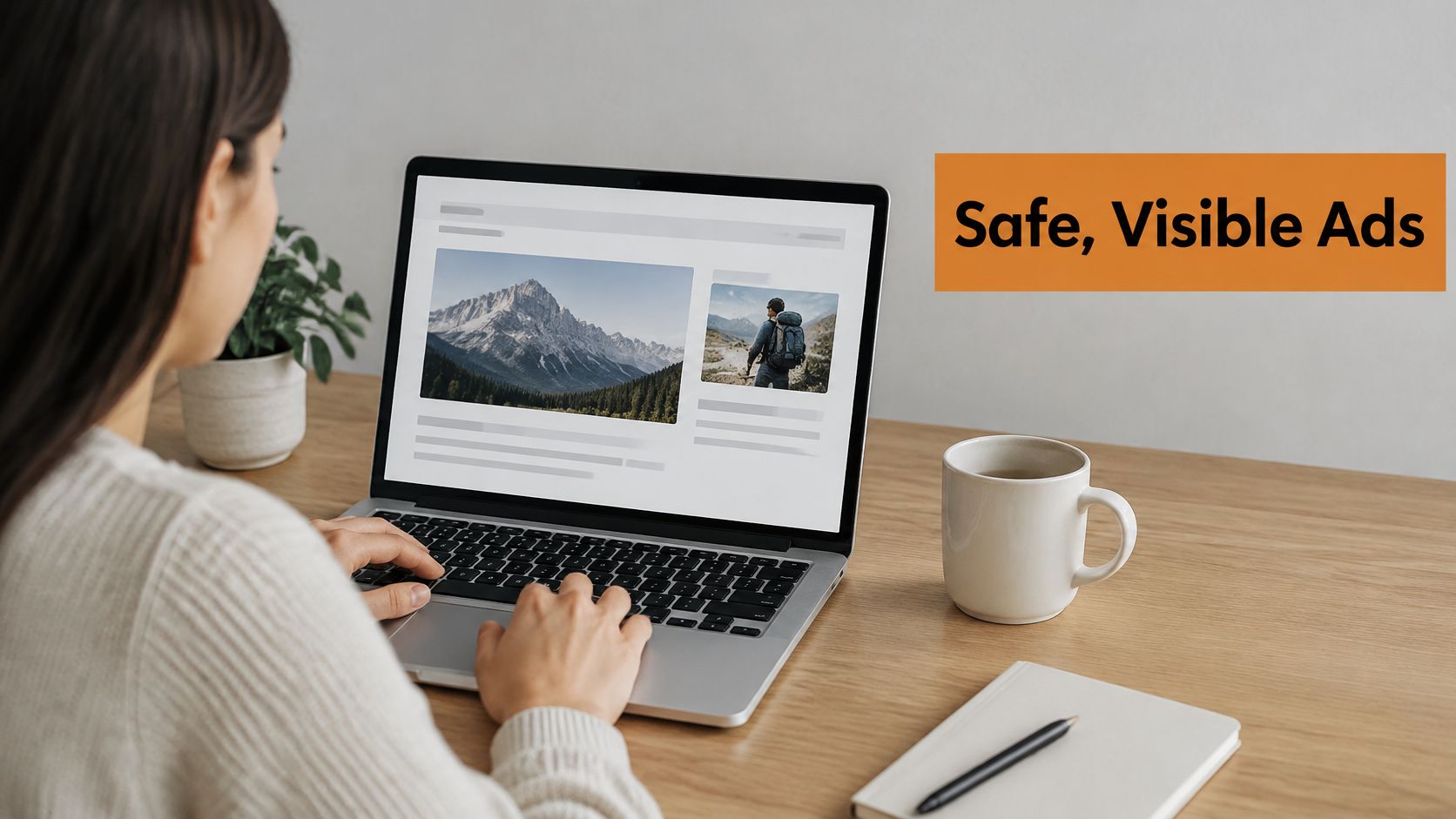
An impression that never appears on screen, or that appears beside content you would not want a client to see, is not reach. Viewability asks whether a person could see the unit. Brand safety asks whether the page is a place your category can sit.
Buying path is part of that control. The IAB Canada 2025 revenue survey found direct buying accounted for 60% of display transactions, private marketplaces for 27%, and open real-time bidding for 13%. Those figures exclude Google, YouTube, and social, so treat them as a display-market benchmark, not all visual spend. I still use them as a buying rule. Direct deals and curated private marketplaces when context, brand safety, and predictable placement matter. Open auctions for scale, fenced with allowlists, exclusions, frequency caps, fraud filters, and a check after the flight.
Placements a Regulated Brand Can Defend
Review placement reports every month and cut weak or unsuitable sites. Use a verification partner for viewability and invalid traffic. For cannabis, CBD, and functional mushrooms, confirm current platform policies plus federal and provincial ad rules before launch. They change. Skip placements that imply a treatment, appeal to minors, or drop a required disclaimer.
A quiet desk review of the placement file beats a surprise in the brand-safety report.
A CBD brand on an approved-site list will reach fewer people than an open exchange. That smaller set is the one a compliance review can survive. A clinic should make the same trade when a cheap site trades in unverified health claims.
6. Measure Conversions and Use Incrementality Testing
Clicks and impressions flatter a campaign that only intercepts demand you already had. The failure mode is display taking credit for a booking or a sale that search, email, or a retail shelf would have produced anyway. Judge the channel on a business outcome, then test whether that outcome still happens when some people never see the ads.
Pick one primary conversion per campaign. A clinic should count booked appointments. A store should count purchases, with add-to-cart as a secondary, not a substitute. Fire real test conversions before you scale. Compare the ad platform with analytics and with the CRM or booking tool. If those three disagree, fix tracking before you trust a return figure.
Retail inventory makes the same point in a different aisle. A 2024 IAB Canada and Retail Council of Canada study reported that more than 60% of agencies and brands worked with retail-media suppliers, and that 44% of retail-media expenditure was on-site. On-site placements sit next to the product. You still need post-click sales or lead quality, not the cheapest click on the plan.
Holdouts, Not Just Attribution Windows
Say you hold display out of one BC region for several weeks and keep another region live, with no second test stacked on top. If bookings rise only where the ads ran, you have a case for incrementality. If they rise in both, the platform was claiming demand you already owned. I would not scale a "strong" display campaign that has never faced a holdout when the volume can support one.
7. Run Structured A/B Tests on Creative and Targeting
Random tweaks feel busy and teach nothing. You change the headline and the audience on the same day, then you cannot tell which one moved the bookings. A test prevents that fog. One variable, a written hypothesis, a stable budget, and a result you can reuse.
Booking.com is the usual reference for a culture that experiments constantly across product and marketing. You do not need that volume. A local service business can pit "Free consultation" against "Free site audit" in identical display sets, same audience, same spend, same dates. An e-commerce brand can swap the image and leave the offer alone. Write the bet in a sentence before launch, including what would count as a win, so you are not inventing the story after the numbers arrive.
Decide Late Enough, and Write It Down
- Hold the other settings still: Audience, bid, and placement stay put so the variable is the only difference.
- Wait for conversions: A higher click rate on day two is not a winner if the bookings have not shown up.
- Keep a log: Date, audience, hypothesis, and result. Next quarter you will not remember which offer won.
Do not stack a creative test on a tracking change or a new frequency cap. Cannabis and mushroom accounts should test claims even more carefully. Two informational lines can be compared. A line that edges into a health promise should not enter the test at all. I would rather have a slower learning log than a disapproved winner.
8. Design Mobile-First Creative and Align Landing Pages
Most of these impressions are seen on a phone. The failure mode is a sharp desktop comp that becomes an unreadable smudge, then a click that opens a slow homepage. You paid for attention and spent it on a page that does not repeat the offer.
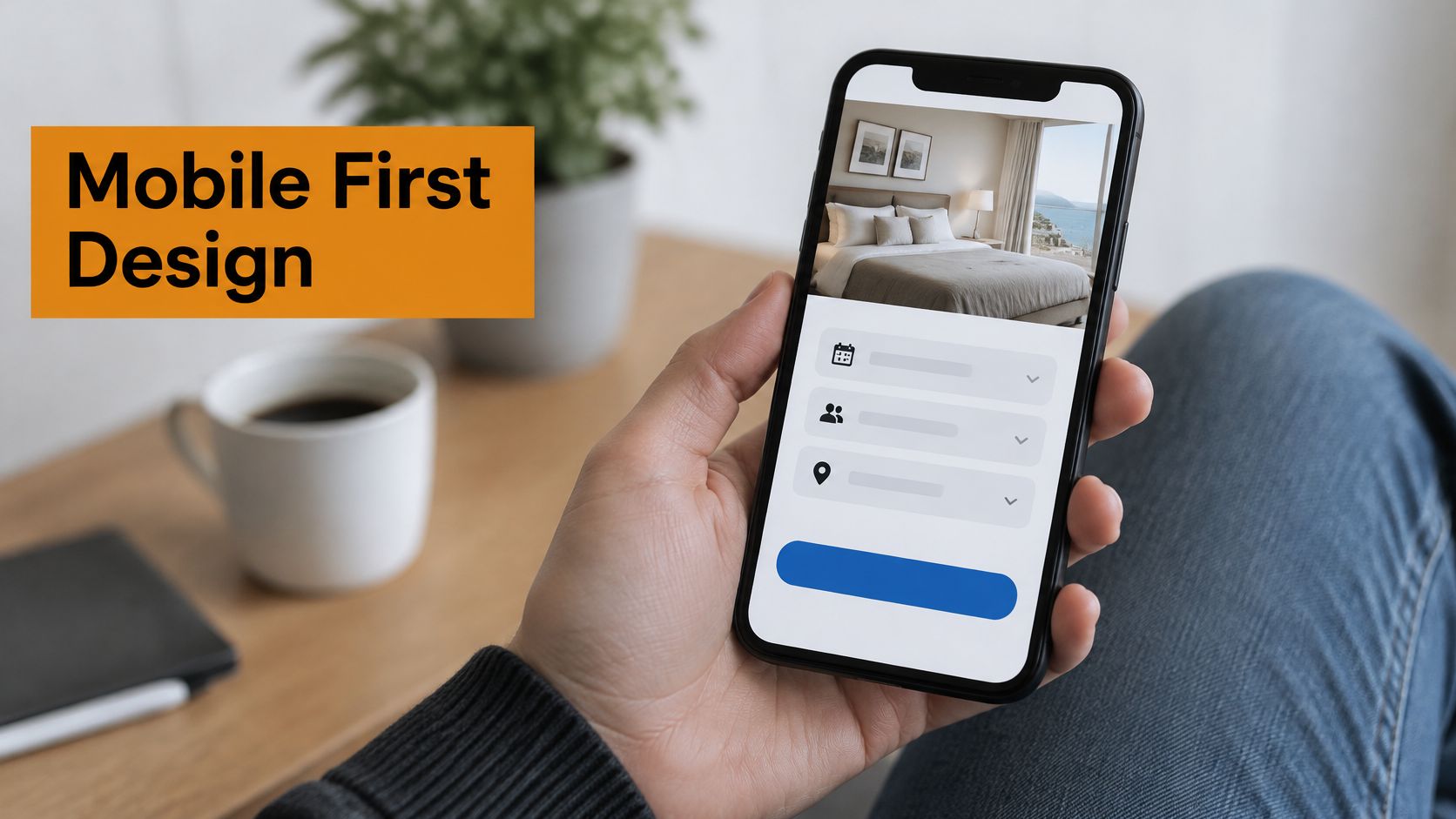
Preview every unit on a phone before launch. Check type at the size people see. Put the same phrase from the ad into the landing headline. A Vancouver clinic should send that traffic to a booking page with click-to-call and visible reviews, not the full site nav. A store should repeat the shipping or price promise above the fold on the product page.
The page is part of the ad, not a separate project.
Fix the Page Before You Buy More Clicks
Run the URL through Google PageSpeed Insights and fix the largest issues first. Heavy hero images and extra scripts are the usual culprits. Use a dedicated page per major offer instead of the homepage. Our notes on mobile site optimization cover the on-page side of that handoff. For regulated products, the mobile page also has to carry disclaimers without burying the next step under a wall of text. If the form asks for eight fields before a consult, the banner was never the problem.
A click is only as good as the first screen it opens.
Display Advertising Best Practices at a Glance
| Item | Primary Goal | Key Metric | Best For |
|---|---|---|---|
| Lead With a Clear Benefit and a Single Strong Call to Action | Communicate one value proposition and prompt action | Click-through rate and message recall | Ads focused on clicks, bookings, or sales |
| Use Responsive and Adaptive Display Formats | Reach more placements with automated asset combinations | Asset performance and campaign reach | Advertisers seeking broad coverage with less design work |
| Target Audiences Using First-Party Data and Layered Signals | Reach relevant users and reduce wasted impressions | Conversion rate and return on ad spend | Campaigns using customer data, remarketing, or intent signals |
| Set Frequency Caps to Prevent Ad Fatigue | Limit repeated exposure and preserve campaign efficiency | Average frequency and click-through rate | Small audiences and longer-running campaigns |
| Prioritize Viewability and Brand Safety | Ensure ads are seen in suitable, trustworthy environments | Viewability and invalid traffic | Sensitive or regulated brands and campaigns |
| Measure Conversions and Use Incrementality Testing | Determine whether ads drive meaningful business outcomes | Conversions, revenue, and incremental lift | Budget decisions and cross-channel measurement |
| Run Structured A/B Tests on Creative and Targeting | Identify and scale effective campaign variations | Test performance against the control | Advertisers improving results through ongoing experimentation |
| Design Mobile-First Creative and Align Landing Pages | Improve the mobile journey from ad click to conversion | Conversion rate, bounce rate, and page speed | Campaigns with substantial mobile traffic |
Turn These Practices Into a Repeatable Display Routine
These eight practices compound only when they run as one routine. A sharp banner still wastes money if frequency is uncapped. A clean cap still wastes money if the click opens the homepage. I would audit live campaigns in a fixed order before anyone adds budget.
Start with what you can see in the account this week.
- Viewability and placements: Pull the placement report, cut sites with weak viewability or the wrong context, and confirm cannabis, CBD, or mushroom ads are not beside content that implies a treatment.
- Frequency: Split prospecting from remarketing and read frequency next to click rate. If frequency climbs while clicks fade, rotate creative before you raise bids.
- Tracking: Fire one test conversion yourself, then compare the ad platform, analytics, and the CRM or booking tool. If those three disagree, do not scale.
Build a testing calendar that changes one variable at a time. Headline one week, audience the next, never both. Give each test enough conversions to mean something, and write the result down with the date and the audience. That log stops the team from retesting the same offer every quarter.
Regulated brands need the same routine with tighter creative. For a cannabis e-commerce client, we ran Google Ads with informational, value-driven copy and put the effort into the landing page, because direct cannabis promotion is restricted. In six months that work reached a 3X return on ad spend. The lesson is not a magic bid. It is message match under a constraint, with the page doing as much work as the banner.
At Juiced Digital, display sits inside a wider measurement habit. Our conversion work covers layout, trust elements, and clearer calls to action, which is often where a good click goes to die. AI-Powered Paid Advertising uses AI agents to build and adjust campaigns, and we still judge them on bookings, sales, or qualified leads rather than cheap clicks. A team that aligns every strategy with measurable outcomes shortens the audit. Free consultations and audits are there if you want those gaps named before the next flight.
Juiced Digital plans and runs display inside paid advertising for local BC businesses, e-commerce brands, and regulated categories such as cannabis, CBD, and functional mushrooms, with audience setup, conversion tracking, and ongoing optimization tied to real outcomes. If your banners are spending without a clear booking or sale behind them, bring the account into a working session and sort viewability, frequency, and landing pages before the next budget increase. Visit Juiced Digital to book a consultation or an audit.
