

Semantic search is quietly changing how people find information online. Most folks still think search engines just match keywords but there is a big new shift happening. Now engines look at the actual intent behind every search, and research shows semantic algorithms can make search results dramatically more accurate and relevant. That means your business can show up for way more of the right kinds of searches even if users never type your exact keywords.
Table of Contents
- What Is Semantic Search And How Does It Work?
- Why Semantic Search Matters For Local Businesses
- Key Concepts Behind Semantic Search Technology
- Practical Applications Of Semantic Search In Seo
- Real-World Impact Of Semantic Search On E-Commerce
Quick Summary
| Takeaway | Explanation |
|---|---|
| Semantic search enhances user context understanding | It goes beyond keyword matching to grasp the deeper intent behind queries, improving the relevance of results. |
| Local businesses can leverage semantic search for visibility | Businesses can optimize their content to match user intentions, increasing discoverability and engagement. |
| Advanced SEO requires holistic content strategies | Focus on comprehensive topics and rich, authoritative content instead of just targeting specific keywords. |
| Semantic search transforms e-commerce experience | It enables more accurate product recommendations based on nuanced user queries, boosting customer satisfaction and conversions. |
| Employ structured data for better SEO performance | Using schema markup helps search engines understand content context, enhancing indexing and search result visibility. |
What is Semantic Search and How Does it Work?
Semantic search represents a sophisticated approach to understanding search queries beyond traditional keyword matching. Unlike conventional search techniques that rely strictly on exact word correspondence, semantic search delves into comprehending the underlying intent and contextual meaning of user queries.
The Core Principles of Semantic Search
At its foundation, semantic search leverages advanced natural language processing and machine learning algorithms to interpret search queries with remarkable depth. By analyzing the relationships between words, understanding user context, and mapping complex linguistic patterns, search engines can deliver more precise and relevant results.
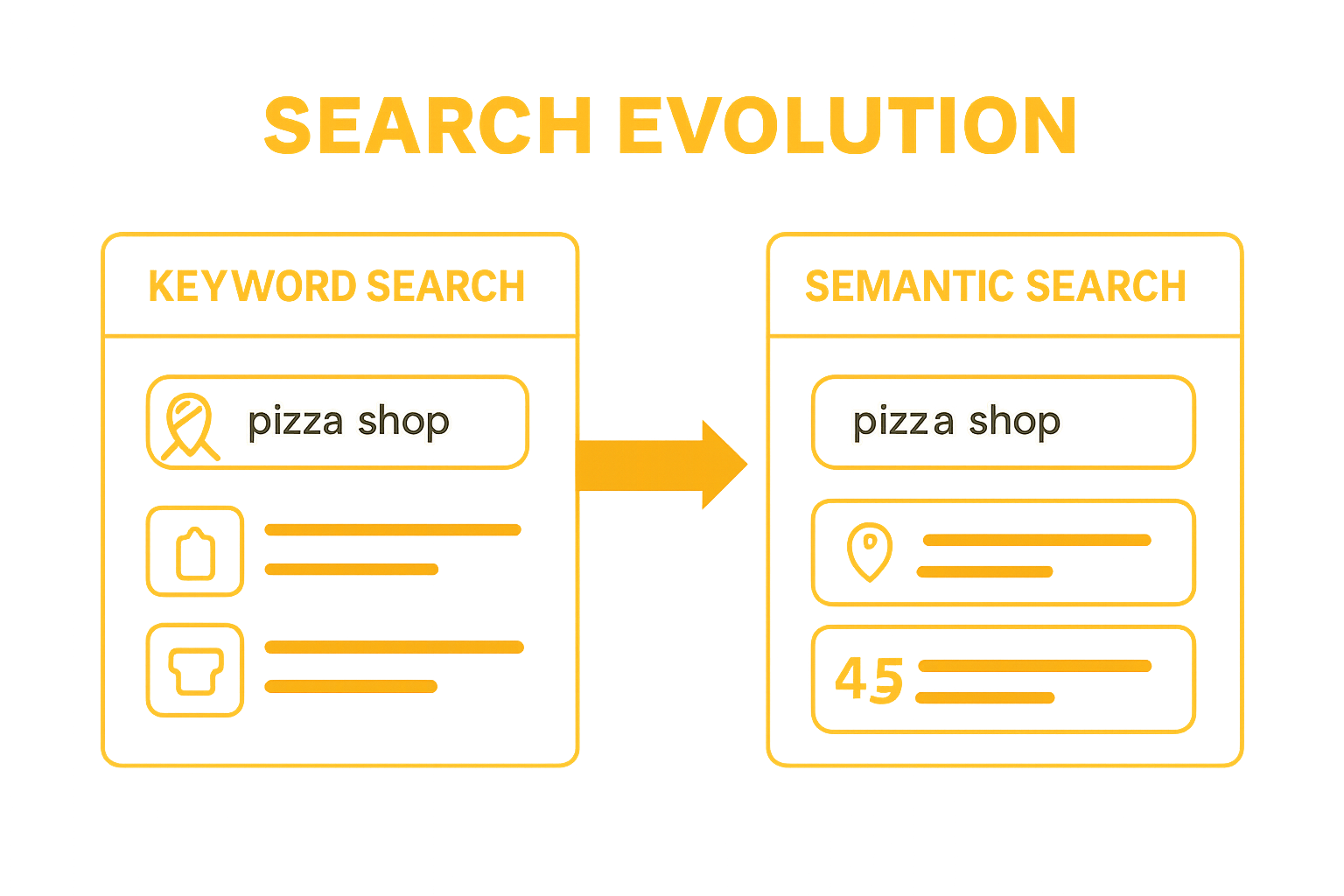
The primary objective of semantic search is to bridge the gap between human language complexity and machine interpretation. This means when a local business owner searches for “best marketing strategies,” the search engine understands not just the literal words but the broader context of what constitutes effective marketing for their specific business type.
How Semantic Search Works in Practice
Semantic search utilizes several sophisticated techniques to decode user queries:
- Entity Recognition: Identifying specific people, places, businesses, and concepts within the search query
- Contextual Understanding: Analyzing the broader meaning and intent behind search terms
- Relationship Mapping: Connecting related concepts and understanding nuanced semantic connections
According to research from the International Journal of Advanced Computer Science and Applications, semantic search transforms how search engines interpret user queries by extracting deeper meaning from both the search terms and indexed content.
For local businesses, this means search engines can now understand complex, conversational queries with unprecedented accuracy. Instead of returning generic results, semantic search can provide hyper-relevant information that matches the specific intent behind a user’s search, dramatically improving the search experience and potential customer engagement.
Why Semantic Search Matters for Local Businesses
For local businesses navigating the complex digital landscape, semantic search represents a transformative approach to online visibility and customer engagement. This advanced search technology goes far beyond traditional keyword matching, offering unprecedented opportunities for businesses to connect with potential customers more effectively.
The Strategic Importance of Semantic Search
Local businesses can leverage semantic search as a powerful tool to improve their online discoverability. By understanding the nuanced intentions behind user searches, businesses can craft content and optimize their digital presence to match exactly what potential customers are seeking. Semantic search essentially acts as a bridge between customer intent and business offerings.
For example, a local coffee shop isn’t just matching keywords like “coffee shop near me” but understanding the underlying context such as customer preferences, time of day, proximity, and specific service requirements. This means more targeted and relevant search results that directly connect businesses with their ideal customers.
Practical Benefits for Local Business Growth
Semantic search provides several critical advantages for local businesses:
- Improved Search Visibility: Higher chances of appearing in relevant search results
- Enhanced User Experience: More precise matches between search queries and business offerings
- Deeper Customer Understanding: Insights into customer search behaviors and intentions
Research from Coursera indicates that semantic search transforms how businesses understand and respond to customer queries, creating more meaningful digital interactions. For local businesses looking to grow their online presence, understanding and implementing semantic search strategies can be a game-changing approach to digital marketing.
This table highlights the practical benefits local businesses gain from implementing semantic search, providing a side-by-side look at each advantage and its impact.
| Benefit | Description | Impact on Local Businesses |
|---|---|---|
| Improved Search Visibility | Higher likelihood of appearing in relevant search results | Greater online presence and reach |
| Enhanced User Experience | More precise matches between customer queries and business offerings | Increased engagement and satisfaction |
| Deeper Customer Understanding | Access to insights on customer search behavior and intentions | Enables more targeted marketing strategies |
By embracing semantic search principles, local businesses can create more intelligent, context-aware digital strategies that not only improve search rankings but also provide genuine value to potential customers. This approach moves beyond traditional SEO tactics, focusing instead on creating meaningful connections through deeper, more intelligent search technologies.
Key Concepts Behind Semantic Search Technology
Semantic search technology represents a sophisticated intersection of linguistics, artificial intelligence, and information retrieval. By transcending traditional keyword matching, this advanced approach enables more intelligent and contextually aware search experiences that transform how digital information is processed and understood.
Natural Language Processing and Machine Learning
Natural Language Processing (NLP) forms the backbone of semantic search technology, allowing machines to comprehend human language with remarkable nuance. This involves breaking down complex linguistic structures, understanding grammatical relationships, and interpreting contextual meanings that go beyond literal word interpretations.
Machine learning algorithms continuously refine these language understanding capabilities, enabling search systems to learn from vast amounts of data and improve their semantic comprehension over time. These algorithms analyze patterns, user interactions, and linguistic variations to develop increasingly sophisticated interpretation models.
Core Technological Components
Semantic search technology relies on several critical technological foundations:
- Knowledge Graphs: Interconnected databases that map relationships between different concepts and entities
- Vector Space Modeling: Mathematical representations of words and phrases that capture semantic relationships
- Entity Recognition: Advanced techniques for identifying and categorizing specific elements within text
According to research from the National Institute of Standards and Technology, these technological components work synergistically to create more intelligent search experiences. When combined, they enable search systems to understand context, intent, and nuanced meaning with unprecedented precision.
For businesses looking to understand modern search technologies, comprehending these underlying semantic search mechanisms becomes crucial. The technology doesn’t just match words but interprets the deeper implications and connections within user queries, creating a more dynamic and responsive search ecosystem.
Below is a table summarizing the key components and technological foundations that drive semantic search technology, as discussed in the section.
| Component | Description | Role in Semantic Search |
|---|---|---|
| Natural Language Processing (NLP) | Enables machines to understand and interpret human language | |
| Forms the basis of query comprehension | ||
| Machine Learning | Algorithms that learn from data and refine interpretations | Improves accuracy and search relevance |
| Knowledge Graphs | Databases mapping relationships between concepts and entities | Supports context-aware query processing |
| Vector Space Modeling | Mathematical representation of words and phrases | Captures semantic similarities and intent |
| Entity Recognition | Identifies and categorizes specific elements in text | Detects and links important query elements |
Practical Applications of Semantic Search in SEO
Semantic search has revolutionized search engine optimization strategies, transforming how businesses approach digital content creation and online visibility. By moving beyond traditional keyword matching, semantic SEO enables more intelligent and contextually rich digital marketing approaches that align closely with user intent and search engine sophistication.
Content Optimization Strategies
Semantic SEO requires a holistic approach to content development that focuses on comprehensive topic coverage rather than narrow keyword targeting. This means creating in-depth, authoritative content that explores subjects from multiple angles, addressing related concepts, synonyms, and contextual variations.
For local businesses, this translates into developing content that demonstrates expertise, answers potential customer questions comprehensively, and provides genuine value. Instead of stuffing articles with repetitive keywords, semantic SEO encourages creating nuanced, well-researched content that naturally incorporates relevant terminology and concepts.
Technical Implementation Techniques
Implementing semantic search principles in SEO involves several critical technical strategies:
- Structured Data Markup: Using schema.org vocabularies to provide explicit context about webpage content
- Entity Optimization: Identifying and strategically incorporating relevant entities related to your business domain
- Topic Clustering: Organizing content around interconnected themes to demonstrate comprehensive subject expertise
Research from semantic search studies indicates that these techniques significantly improve search engine understanding of webpage content, leading to more accurate indexing and higher potential rankings.
For businesses aiming to boost their organic traffic strategies, understanding and implementing semantic search principles becomes crucial. The goal is not just to rank for specific keywords, but to establish digital authority by providing comprehensive, contextually rich information that genuinely serves user needs.
Real-World Impact of Semantic Search on E-commerce
Semantic search has fundamentally transformed the e-commerce landscape, revolutionizing how online businesses connect with customers and optimize their digital shopping experiences. By moving beyond simplistic keyword matching, semantic technologies enable more intelligent, intuitive product discovery and personalized customer interactions.
Enhanced Product Discovery and Relevance
Product search functionality now goes far beyond traditional text matching. Semantic search allows e-commerce platforms to understand the nuanced intent behind customer queries, delivering more precise and contextually relevant results. This means when a customer searches for “comfortable running shoes for flat feet,” the search engine comprehends the specific requirements and returns highly targeted product recommendations.
This advanced search capability bridges the gap between customer expectations and product offerings, reducing frustration and increasing the likelihood of successful purchases.
 By interpreting the underlying meaning of search queries, e-commerce platforms can surface products that might have been missed through conventional keyword-based searches.
Customer Experience and Conversion Optimization
Semantic search technologies provide several critical advantages for e-commerce businesses:
- Intelligent Recommendation Systems: Suggesting products based on comprehensive user intent and behavioral patterns
- Contextual Understanding: Interpreting complex, conversational search queries with high accuracy
- Personalized Shopping Experiences: Delivering more relevant product matches tailored to individual user preferences
Research from the Frontiers in Big Data journal highlights that semantic search significantly improves product discoverability and customer satisfaction in online shopping environments. Businesses implementing these technologies have witnessed measurable improvements in conversion rates and user engagement.
For e-commerce businesses looking to optimize their product page strategies, understanding and implementing semantic search principles becomes crucial. The goal is not just to display products, but to create an intelligent, responsive shopping experience that anticipates and meets customer needs with unprecedented precision.
Ready to Transform How Customers Find Your Business?
Feeling frustrated by outdated keyword strategies that leave your business buried in search results? You are not alone. Local businesses today face the urgent challenge of standing out in a world moving rapidly toward semantic search, where understanding customer intent makes all the difference. Instead of missing out on high-value customers, discover how real semantic optimization can put you at the top of local map packs and generate more leads. Learn proven strategies that are already working for dispensaries and e-commerce businesses in our Ecommerce Category Page SEO Tips for Dispensaries 2025 guide.
Give your business a clear advantage with an expert team that knows how to turn semantic search into measurable growth. The landscape is changing now, and you need solutions that keep you ahead rather than catch up. Visit Juiced Digital to start a conversation about how you can harness smarter search visibility and beat your competition in organic rankings, map packs, and revenue. Take the next step toward real local growth today.
Frequently Asked Questions
What is semantic search?
Semantic search is an advanced search technique that goes beyond traditional keyword matching by understanding the intent and contextual meaning behind user queries.
How does semantic search benefit local businesses?
Semantic search improves local businesses’ online visibility by connecting them more effectively with potential customers, ensuring more relevant search results based on user intent rather than just keywords.
What are the key components of semantic search technology?
Key components include natural language processing, knowledge graphs, entity recognition, and vector space modeling, all of which help search engines understand context and relationships within search queries.
How can local businesses optimize their content for semantic search?
Businesses can optimize for semantic search by creating comprehensive, topic-rich content, implementing structured data markup, and organizing their content into related themes to demonstrate expertise.
Recommended
- Understanding SEO and Accessibility for Local Businesses – Digital PR Expert | Digital Marketing & Search Leaders
- SEO for Small Businesses: Grow Local and Online in 2025 – Digital PR Expert | Digital Marketing & Search Leaders
- Understanding Lead Generation Through SEO for Local Businesses – Digital PR Expert | Digital Marketing & Search Leaders
- Local SEO vs. National SEO: Which is Right for Your Business?
- What Is Local SEO? A Comprehensive Guide to Boost Your Local Business Visibility