

Small business owners have more ways to get funding than ever before. Over 99.9 percent of all businesses in the United States are classified as small businesses. That sounds empowering. Or maybe a little overwhelming. Most entrepreneurs think landing the right funding is just about filling out loan forms and hoping for approval. The real story is those options can look completely different depending on your industry or even your business goals.
Table of Contents
- What Are Small Business Funding Options?
- Why Small Business Funding Options Matter
- How Small Business Funding Options Work
- Key Concepts Of Small Business Funding
- Types Of Funding Options For Small Businesses
Quick Summary
| Takeaway | Explanation |
|---|---|
| Understand diverse funding options. | Familiarize yourself with traditional loans, SBA loans, equipment financing, and lines of credit as primary funding sources. |
| Evaluate your business’s financial health. | Assess revenue streams, credit history, and growth projections to determine the best funding strategy for your needs. |
| Consider industry regulations. | Recognize that sectors like cannabis and e-commerce may have unique funding challenges and regulatory requirements. |
| Prepare detailed financial documentation. | Ensure you have thorough documentation of your business operations and financial performance for lenders’ evaluations. |
| Match funding sources with growth goals. | Align your chosen funding mechanism with your specific business objectives for sustainable financial development. |
What Are Small Business Funding Options?
Small business funding options represent critical financial resources that help entrepreneurs transform their vision into reality. These financial mechanisms provide the necessary capital for businesses to launch, expand, and sustain operations across various industries, including cannabis, e-commerce, and local retail sectors.
Understanding Financial Pathways
Small business funding encompasses multiple financial instruments designed to meet different business needs and stages of growth. According to the U.S. Small Business Administration, entrepreneurs can access diverse funding strategies tailored to their specific requirements.
The primary funding options typically include:
- Traditional Bank Loans: Conventional financing with structured repayment terms
- Small Business Administration (SBA) Loans: Government-backed financing with competitive rates
- Equipment Financing: Capital specifically for purchasing business equipment
- Lines of Credit: Flexible borrowing options for managing cash flow
Evaluating Funding Strategies
Successful funding requires careful evaluation of your business model, financial health, and growth objectives. Business owners must consider factors like:
- Current revenue streams
- Credit history
- Collateral availability
- Long-term financial projections
- Specific industry regulations
Entrepreneurs in regulated industries like cannabis and e-commerce often face unique challenges when seeking funding. These sectors require specialized financial strategies that account for complex regulatory environments and potential banking restrictions.
By understanding the nuanced landscape of small business funding options, entrepreneurs can strategically select financial resources that align with their growth trajectory and operational needs. The key is to match funding sources with specific business goals, ensuring sustainable financial development and long-term success.
Why Small Business Funding Options Matter
Small business funding is not merely a financial transaction but a critical lifeline that determines the survival, growth, and competitive positioning of entrepreneurial ventures. In today’s complex business landscape, access to strategic capital can mean the difference between stagnation and breakthrough success.
Economic Empowerment and Growth
According to the U.S. Small Business Administration, small businesses represent 99.9% of all United States businesses and generate substantial economic activity. Funding options enable these businesses to:
- Invest in critical infrastructure and technology
- Hire and retain talented employees
- Expand market reach and product offerings
- Manage unexpected financial challenges
Strategic Business Development
Funding is more than financial support. It represents a strategic tool for business transformation. Entrepreneurs who understand and leverage appropriate funding mechanisms can create sustainable growth strategies. Check out our guide on SEO marketing tips to complement your funding strategy and maximize business potential.
Specifically for industries like cannabis, e-commerce, and local retail, funding becomes even more nuanced. These sectors often face unique regulatory challenges that require specialized financial approaches. Proper funding can help businesses navigate complex compliance requirements and scale operations effectively.
Understanding the importance of funding goes beyond immediate financial needs. It represents a strategic investment in a business’s future, enabling entrepreneurs to seize opportunities, mitigate risks, and build resilient organizations capable of adapting to changing market dynamics.
How Small Business Funding Options Work
Small business funding operates through a complex ecosystem of financial mechanisms designed to match business needs with appropriate capital sources. Understanding these intricate pathways helps entrepreneurs strategically navigate their financial growth opportunities.
Application and Evaluation Process
According to National Funding, the funding process typically involves comprehensive financial assessments where lenders evaluate multiple critical factors. Business owners must prepare detailed documentation demonstrating their operational viability, financial health, and growth potential.
Key evaluation criteria often include:
- Business credit score
- Annual revenue
- Time in business
- Debt-to-income ratio
- Industry-specific risk factors
Funding Mechanism Dynamics
Funding options operate through different structural approaches. Some mechanisms provide direct capital infusion, while others create flexible financial frameworks that adapt to business fluctuations. Check out our guide on SEO marketing strategies to understand how strategic marketing can complement your funding approach.
For specialized sectors like cannabis, e-commerce, and local retail, funding mechanisms often require additional compliance documentation and more stringent risk assessments. These industries face unique regulatory challenges that demand sophisticated financial planning.
The fundamental goal of small business funding is to provide strategic capital that enables growth, manages operational expenses, and creates sustainable financial infrastructure. Successful funding requires a nuanced understanding of both financial products and individual business contexts, ensuring entrepreneurs can access resources aligned with their specific operational needs and growth objectives.
Key Concepts of Small Business Funding
Small business funding encompasses sophisticated financial strategies that extend far beyond simple monetary transactions. Understanding the fundamental principles helps entrepreneurs make informed decisions about their capital acquisition and growth strategies.
Financial Risk and Assessment
According to Forbes, financial risk assessment represents a critical component of funding mechanisms. Lenders and investors evaluate multiple dimensions to determine a business’s financial viability and potential return on investment.
Key risk evaluation components include:
- Historical financial performance
- Market volatility
- Competitive landscape
- Management team expertise
- Projected revenue streams
Funding Structure and Terminology
Funding mechanisms utilize specific financial terminology that entrepreneurs must comprehend. Debt financing involves borrowing money with the expectation of repayment, while equity financing requires exchanging business ownership stakes for capital investment. Learn more about strategic marketing approaches that can enhance your funding potential.
In specialized sectors like cannabis, e-commerce, and local retail, funding structures become increasingly complex. These industries often require nuanced financial approaches that account for regulatory restrictions, market volatility, and unique operational challenges.
Successful funding strategies demand a holistic understanding of financial ecosystems.
This table outlines important funding-related terms mentioned in the article along with their definitions to clarify key concepts for small business owners.
| Term | Definition |
|---|---|
| Debt Financing | Borrowing money with the expectation of repayment, usually with interest. |
| Equity Financing | Exchanging a percentage of business ownership for capital investment. |
| Collateral | Assets pledged to secure a loan, which the lender can claim if the loan is unpaid. |
| Credit History | A record of a business’s ability to repay debts, influencing funding eligibility. |
| Compliance | Meeting legal and regulatory requirements, especially crucial in regulated industries. |
Types of Funding Options for Small Businesses
Small businesses have diverse funding pathways that cater to different operational needs, growth stages, and financial objectives. Understanding these varied options allows entrepreneurs to strategically select the most appropriate financial resources for their specific business context.
Traditional Lending Mechanisms
According to the Small Business Administration, small businesses can access multiple lending options designed to support various financial requirements. Traditional funding mechanisms provide structured approaches to capital acquisition.
Key traditional funding options include:
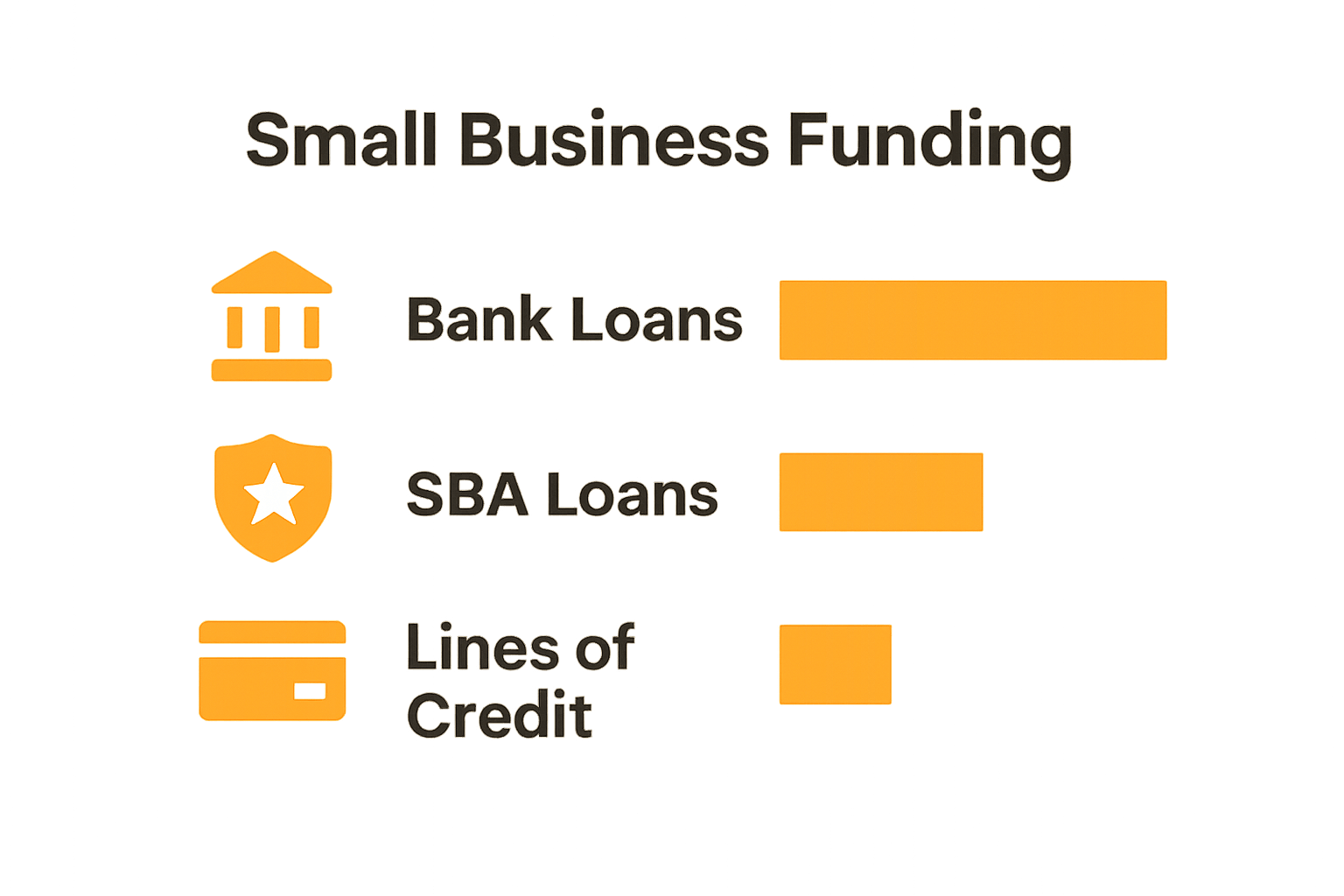
- Bank Loans: Conventional financing with predictable repayment schedules
- SBA-Guaranteed Loans: Government-backed financing with competitive terms
- Equipment Financing: Specialized loans for purchasing business infrastructure
- Business Lines of Credit: Flexible borrowing options for managing cash flow
Alternative Funding Strategies
Beyond conventional lending, entrepreneurs can explore innovative funding approaches that offer greater flexibility. Venture capital and angel investors provide equity-based funding for high-growth potential businesses. Learn more about strategic marketing approaches that can enhance your funding attractiveness.
For specialized sectors like cannabis, e-commerce, and local retail, funding strategies must account for unique regulatory landscapes. These industries often require more nuanced financial approaches that balance risk management with growth potential.
Successful funding selection demands a comprehensive understanding of each option’s advantages, limitations, and alignment with specific business goals.
Below is a comparison of the major small business funding options discussed in the article, summarizing key features, requirements, and ideal use cases.
| Funding Option | Key Features | Typical Requirements | Best For |
|---|---|---|---|
| Traditional Bank Loan | Fixed repayment terms, predictable interest rates | Good credit, collateral, documentation | Established businesses with steady cash flow |
| SBA Loan | Government-backed, competitive rates | Business plan, credit, eligibility | Expanding or launching businesses |
| Equipment Financing | Funds for purchasing equipment, asset-secured | Industry-specific collateral | Businesses acquiring new equipment |
| Line of Credit | Flexible borrowing, pay interest on amount used | Fair to good credit, revenue history | Managing cash flow, short-term needs |
| Venture Capital/Angel Investment | Equity-based, guidance & capital for high growth | High-growth potential, scalability | Startups in fast-growing industries |

Secure the Right Funding and Accelerate Your Business Growth
Struggling to navigate complex funding options or facing challenges in highly regulated industries like cannabis or e-commerce? This article explained how crucial it is to align financial resources with your business goals while overcoming pain points such as compliance hurdles, limited access to traditional funding, and the need for a clear growth strategy. Many small business owners feel uncertain about which financial pathways best support their operational needs, all while trying to maximize visibility and revenue.
If you want to turn capital into lasting growth, now is the time to power up your journey with expert digital marketing strategies. Juiced Digital specializes in helping businesses like yours stand out, even in restricted or competitive markets. Our proven SEO systems and content solutions work hand-in-hand with your funding efforts, driving more leads, sales, and sustainable results. Ready to take the next step? Visit Juiced Digital and discover how our personalized approach can convert your investment into measurable business success. Or explore our guide on SEO marketing tips for actionable ideas you can use right now.
Frequently Asked Questions
What are the main types of small business funding options?
Small business funding options include traditional bank loans, Small Business Administration (SBA) loans, equipment financing, and lines of credit, each catering to different financial needs and growth stages.
How does the application process for small business funding work?
The application process typically involves detailed financial assessments where lenders evaluate factors like business credit score, annual revenue, and time in business to determine eligibility for funding.
What factors should I consider when evaluating small business funding strategies?
Consider factors such as current revenue streams, credit history, collateral availability, long-term financial projections, and any specific industry regulations that may impact funding options.
Why is small business funding important for entrepreneurs?
Small business funding is vital as it helps entrepreneurs invest in infrastructure, hire employees, expand market reach, and manage unforeseen financial challenges, enabling overall business growth and sustainability.
Recommended
- 6 SEO Marketing Tips to Help Small Businesses Get Ahead
- SEO for Small Businesses: Grow Local and Online in 2025 – Digital PR Expert | Digital Marketing & Search Leaders
- SEO for Small Businesses: Grow Local and Online in 2025 – Digital PR Expert | Digital Marketing & Search Leaders
- 7 Effective Team Motivation Strategies for Local Businesses – Digital PR Expert | Digital Marketing & Search Leaders