

Sustainable business practices are shaping how companies thrive in a fast-changing economy. Nearly 73 percent of customers say they’re more likely to support a business with strong sustainable values. Seems like going green is a trend every company is chasing, right? Surprisingly, it is not just about following trends or looking good. The real impact comes from weaving sustainability into every part of a business, making it a core strategy for long-term growth and real positive change.
Table of Contents
- What Are Sustainable Business Practices?
- Why Sustainable Business Practices Matter
- How Sustainable Business Practices Work
- Key Concepts Of Sustainable Business Practices
- Real-World Examples Of Sustainable Business Practices
Quick Summary
| Takeaway | Explanation |
|---|---|
| Sustainable practices enhance long-term value | Integrating environmental, social, and economic factors boosts stakeholder value over traditional profit models. |
| Implement thorough sustainability audits | Regular audits identify areas for improvement and ensure sustained progress in business practices. |
| Focus on stakeholder inclusivity | Businesses should consider the interests of all affected parties to create a responsible organizational culture. |
| Utilize technology for sustainability | Innovative tech solutions can help track, measure, and improve sustainability efforts efficiently. |
| View sustainability as a strategic advantage | Embracing sustainability leads to innovation and attracts conscious consumers, bolstering competitive positioning. |
What Are Sustainable Business Practices?
Sustainable business practices represent a strategic approach where companies integrate environmental, social, and economic considerations into their core operations. These practices go beyond traditional profit-driven models, focusing on creating long-term value for stakeholders while minimizing negative impacts on the environment and society.
Below is a table summarizing the three core components of sustainable business strategy, highlighting their focus and main priorities.
| Core Component | Focus Area | Main Priorities |
|---|---|---|
| Environmental Responsibility | Minimize negative environmental impact | Reduce carbon footprint, minimize waste, optimize resources |
| Social Impact | Positive contribution to society and workforce | Fair labor, diversity, community development |
| Economic Viability | Long-term financial health and growth | Ethical growth strategies, maintain profitability |
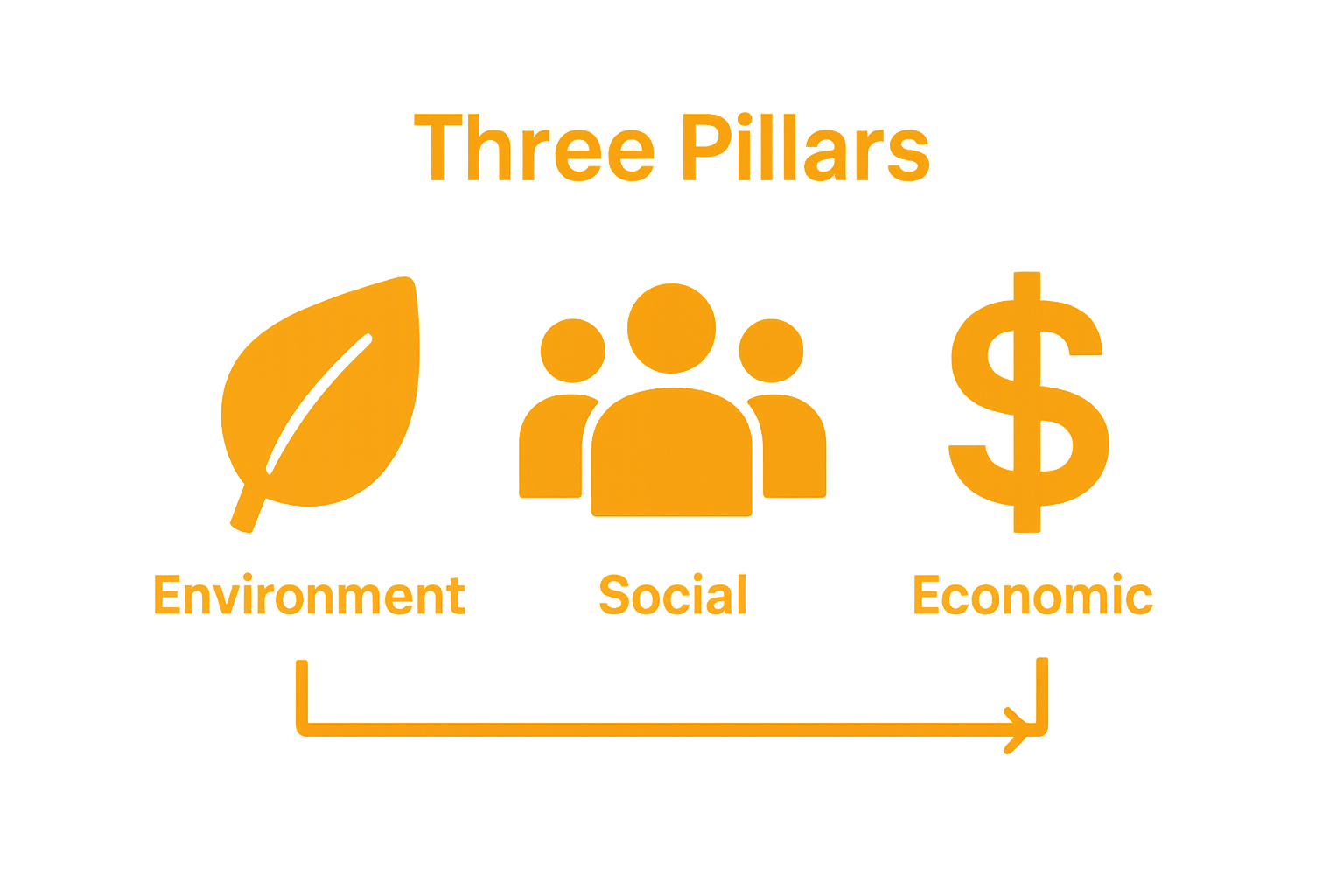
Core Components of Sustainable Business Strategy
At the heart of sustainable business practices are three fundamental pillars that guide organizational decision making and strategy
:
- Environmental Responsibility: Reducing carbon footprint, minimizing waste, and implementing resource-efficient processes
- Social Impact: Ensuring fair labor practices, promoting diversity, and contributing positively to community development
- Economic Viability: Maintaining financial health while pursuing ethical and sustainable growth strategies
According to research from the Organisation for Economic Co-operation and Development (OECD), sustainable business practices are not just ethical choices but strategic imperatives for modern organizations. Companies that successfully integrate these principles can achieve significant competitive advantages, including cost reduction, enhanced brand reputation, and increased customer loyalty.
Implementing Sustainable Business Practices
Successful implementation requires a holistic approach that touches every aspect of business operations. This means moving beyond superficial environmental gestures and embedding sustainability into the organizational culture. Key strategies include:
- Conducting comprehensive sustainability audits to identify improvement areas
- Developing transparent reporting mechanisms for environmental and social performance
- Investing in technologies and processes that reduce environmental impact
- Training employees and creating accountability for sustainable practices
For cannabis, e-commerce, and local businesses, sustainable practices can translate into specific actions like responsible sourcing, energy-efficient operations, waste reduction, and creating inclusive workplace environments. By viewing sustainability as a strategic opportunity rather than a compliance requirement, businesses can unlock innovation, attract conscious consumers, and build resilient, future-ready organizations.
Why Sustainable Business Practices Matter
Sustainable business practices have transitioned from optional strategies to essential frameworks for organizational survival and growth. They represent a critical approach to addressing global challenges while simultaneously creating competitive advantages for businesses across various sectors.
Economic Imperative of Sustainability
Modern businesses recognize that sustainability is not merely an ethical choice but a profound economic strategy. Companies that prioritize sustainable practices often experience significant financial benefits, including reduced operational costs, enhanced market positioning, and improved long-term resilience. Our guide on community engagement for businesses explores how these strategies can create meaningful connections beyond traditional business models.
Key economic advantages of sustainable practices include:
The following table compares common economic advantages gained by organizations that adopt sustainable business practices.
| Economic Advantage | Description |
|---|---|
| Lower Resource/Operational Costs | Reduced spending through efficient resource use and waste reduction |
| Increased Investor Confidence | Attracts responsible investment funds and enhances credibility |
| Enhanced Brand Reputation & Customer Loyalty | Builds trust, strengthens brand, and encourages repeat business |
| Tax Incentives & Government Support | Access to government benefits for environmental or social initiatives |
| Improved Long-term Resilience | Business is better able to withstand market and regulatory shifts |
- Lower resource consumption and waste management expenses
- Increased investor confidence and access to responsible investment funds
- Enhanced brand reputation and customer loyalty
- Potential tax incentives and government support for green initiatives
Competitive Advantage in a Changing Market
According to research from the Organisation for Economic Co-operation and Development (OECD), businesses that integrate sustainable practices gain significant competitive advantages. These organizations are better positioned to anticipate market shifts, meet evolving consumer expectations, and develop innovative solutions to complex challenges.
Consumers increasingly make purchasing decisions based on a company’s environmental and social responsibility. By demonstrating genuine commitment to sustainability, businesses can differentiate themselves in crowded markets, attract conscious consumers, and build stronger, more authentic brand relationships.
Particularly for cannabis, e-commerce, and local businesses, sustainable practices offer unique opportunities to demonstrate leadership and responsibility. From responsible sourcing and energy-efficient operations to creating inclusive workplace environments, these strategies help build trust, attract top talent, and create lasting positive impact beyond traditional business metrics.
How Sustainable Business Practices Work
Sustainable business practices function through an integrated approach that transforms traditional operational models into comprehensive systems designed to balance economic performance with environmental and social responsibilities. This approach involves strategic planning, systematic implementation, and continuous improvement across multiple organizational dimensions.
Strategic Framework and Implementation
The operational mechanism of sustainable business practices relies on a structured framework that encompasses three primary domains: environmental stewardship, social accountability, and economic performance. Organizations develop comprehensive strategies that align business objectives with sustainable development goals, creating a holistic approach to value creation.
Key implementation strategies include:
- Developing robust sustainability policies and governance structures
- Conducting regular environmental and social impact assessments
- Creating transparent reporting mechanisms
- Establishing measurable sustainability targets
According to research exploring sustainable business development guidelines, successful implementation requires a systematic approach that integrates sustainability principles into core business processes, rather than treating them as peripheral activities.
Measurement and Continuous Improvement
Sustainable business practices operate through continuous monitoring, evaluation, and adaptation. Companies utilize sophisticated metrics and key performance indicators (KPIs) to track their progress across environmental, social, and economic dimensions. These measurements help organizations identify areas for improvement, validate their strategies, and demonstrate tangible impact to stakeholders.
For cannabis, e-commerce, and local businesses, this means developing specialized metrics that capture unique industry challenges. Examples include tracking carbon emissions, measuring supply chain sustainability, monitoring waste reduction efforts, and assessing social impact initiatives.
The most effective sustainable business practices are dynamic systems that evolve with changing market conditions, technological advancements, and stakeholder expectations. By creating adaptive frameworks that prioritize transparency, innovation, and responsible growth, businesses can transform sustainability from a compliance requirement into a strategic competitive advantage.
Key Concepts of Sustainable Business Practices
Sustainable business practices are built upon foundational principles that transform traditional corporate approaches into comprehensive, responsible strategies. These key concepts represent a holistic framework that goes beyond profit generation to create meaningful, long-term value for businesses, stakeholders, and the broader ecosystem.
Core Foundational Elements
The conceptual foundation of sustainable business practices rests on interconnected principles that guide organizational decision making and strategic development. These principles represent a paradigm shift from short-term financial gains to comprehensive, responsible business models.
Fundamental concepts include:
- Systemic Thinking: Recognizing the interconnectedness of business operations with environmental and social systems
- Stakeholder Inclusivity: Considering the interests of all parties affected by business activities
- Long-Term Value Creation: Prioritizing sustainable growth over immediate financial returns
- Transparency and Accountability: Maintaining open communication about business practices and their impacts
Holistic Performance Measurement
According to research from the Smithsonian Magazine, sustainable business practices are characterized by five critical pillars: governance, transparency, environmental impact, social responsibility, and stakeholder engagement. These pillars provide a comprehensive framework for evaluating business performance beyond traditional financial metrics.
For cannabis, e-commerce, and local businesses, this means developing nuanced approaches that:
- Integrate sustainability metrics into core performance indicators
- Create robust reporting mechanisms
- Develop adaptive strategies that respond to emerging environmental and social challenges
- Foster a culture of continuous learning and improvement
The ultimate goal of sustainable business practices is to create a regenerative model where business success is intrinsically linked to positive environmental and social outcomes. By embracing these key concepts, organizations can transform from extractive entities to positive contributors in the global ecosystem, driving innovation, resilience, and meaningful change across industries.
Real-World Examples of Sustainable Business Practices
Sustainable business practices are transforming industries by demonstrating that environmental responsibility and economic success can coexist. These real-world examples showcase innovative approaches that integrate sustainability into core business strategies, proving that meaningful change is both possible and profitable.
Cannabis and Hemp Industry Innovations
Cannabis and hemp businesses are emerging as leaders in sustainable practices, leveraging their industry’s unique potential for environmental stewardship. These companies are pioneering approaches that minimize ecological impact while creating economic opportunities.
Key sustainable strategies in the cannabis sector include:
- Developing organic cultivation methods that reduce chemical inputs
- Implementing water-conservation techniques in growing operations
- Using renewable energy sources for cultivation and processing
- Creating closed-loop waste management systems
Technology-Driven Sustainability Solutions
According to research exploring technology-enabled sustainable entrepreneurship, innovative technologies are playing a crucial role in supporting sustainable business models. Digital platforms and smart technologies enable businesses to track, measure, and improve their environmental performance with unprecedented precision.
For e-commerce and local businesses, technology-driven sustainability can manifest through:
- Implementing AI-powered energy management systems
- Developing smartphone apps that support conscious consumer choices
- Creating transparent supply chain tracking mechanisms
- Utilizing blockchain for verifiable sustainability reporting
The most successful sustainable business practices demonstrate that environmental responsibility is not a constraint but an opportunity for innovation. By reimagining traditional business models, companies across sectors can create value that extends beyond financial metrics, contributing to broader ecological and social well-being. These real-world examples illustrate how committed businesses can drive meaningful change while maintaining economic viability and competitive advantage.
Make Sustainable Growth Your Competitive Edge With Juiced Digital
Ready to move beyond just knowing about sustainable business practices and start making real, lasting impact? If you are striving to improve environmental responsibility, strengthen your brand reputation, or build trust in competitive spaces, aligning your business with proven sustainable strategies is crucial. Explore how our Reputation Management solutions can help build long-term loyalty and positive recognition for your business, especially in industries where transparency and ethical practices matter most.

Now is the time to transform your vision for sustainability into measurable results. Partner with Juiced Digital and get access to powerful SEO, specialized content marketing, and advanced automation tailored to cannabis, e-commerce, and local businesses. Let our team help you turn a commitment to sustainable business practices into stronger search visibility, improved rankings, and real revenue growth. Take the first step today and see the difference ethical, strategic marketing can make for your business success.
Frequently Asked Questions
What are sustainable business practices?
Sustainable business practices are strategies that integrate environmental, social, and economic considerations into a company’s core operations, aiming to create long-term value for stakeholders while minimizing negative impacts on the environment and society.
Why are sustainable business practices important for businesses?
Sustainable business practices are crucial as they not only address global challenges but also create competitive advantages, such as reduced operational costs, enhanced brand reputation, and increased customer loyalty, which contribute to a company’s long-term success and resilience.
How can companies implement sustainable business practices effectively?
Companies can implement sustainable business practices by conducting comprehensive sustainability audits, developing transparent reporting mechanisms, investing in resource-efficient technologies, and fostering an organizational culture that prioritizes sustainability.
What are some examples of sustainable practices in the cannabis industry?
In the cannabis industry, examples of sustainable practices include organic cultivation methods, water-conservation techniques, use of renewable energy sources, and closed-loop waste management systems that minimize ecological impact while promoting economic opportunities.
Recommended
- Understanding Community Engagement for Businesses – Digital PR Expert | Digital Marketing & Search Leaders
- Reputation Management Strategies for Cannabis and Local Businesses 2025 – Digital PR Expert | Digital Marketing & Search Leaders
- Branding Mistakes to Avoid: Essential Tips for Cannabis and Local Businesses 2025 – Digital PR Expert | Digital Marketing & Search Leaders
- Improving Customer Loyalty: Top Strategies for 2025 Success – Digital PR Expert | Digital Marketing & Search Leaders
- Sustainable Websites: How to make a website sustainable? |BM
- Sustainable Marketing Strategies for Businesses in 2025 – Zoo Digital