
At its core, AI rank tracking uses artificial intelligence to look beyond a simple list of keyword positions. It’s about monitoring and predicting your website’s real visibility by analysing the entire search engine results page (SERP) ecosystem. This gives us predictive insights into why rankings are changing, offering a much more dynamic picture of SEO performance than we’ve ever had before.
Beyond Static Numbers: The New Era of SEO Intelligence

Think about trying to navigate a busy city using a paper map printed last week. You know where you were, but you have no clue about today’s traffic jams, recent road closures, or any quicker routes that just opened up. That’s pretty much what traditional rank tracking feels like in today’s fast-moving search world. It gives you a static number—your position for a specific keyword—but it completely misses the living, breathing context around it.
Now, imagine swapping that paper map for a live GPS that not only shows your current spot but also predicts traffic patterns. That’s AI rank tracking. It anticipates slowdowns (like algorithm updates), points out shortcuts you might not have known about (like new SERP features), and helps you chart the most efficient course to your destination (meaning more visibility and conversions). For SEO professionals, this isn’t just a new tool; it’s a fundamental shift in how we approach our work.
A New Framework for Online Visibility
The game isn’t just about chasing that coveted #1 spot anymore. The real focus has shifted to understanding the entire conversation happening between a user and the search engine. This is more critical than ever, especially with features like Google’s AI Overviews completely changing how people find and consume information.
AI-powered tools give us a much clearer view of what’s actually happening on the SERP, helping us see:
- Holistic SERP Presence: Are you just a blue link, or are you showing up in featured snippets, video carousels, and “People Also Ask” boxes?
- Predictive Forecasting: What if you could anticipate ranking drops or see a competitor’s move before it eats into your traffic? AI makes this possible.
- True Competitor Intelligence: It’s not just about knowing who ranks above you, but why they’re outperforming you by dissecting their entire SERP footprint.
This move towards intelligent analysis is all about shifting from being reactive to proactive. It’s the difference between reading last week’s sales report and using a sophisticated forecast to stock your shelves for next month’s customer demand.
For instance, this approach is already making waves in competitive local markets. Some Vancouver-based agencies have noted a massive 68% increase in the time visitors from AI-driven platforms spend on client websites compared to traditional organic search traffic. This isn’t just about getting clicks; it’s about attracting a more engaged audience, which is just one of the many tangible benefits of AI in SEO.
2. How AI Cracks the Code of Modern Search

So, how does this AI-powered tracking actually work?
Think of it like this: a traditional rank tracker is like a detective who only checks for one specific clue—your keyword’s position. They find it, report back, and the case is closed. An AI-powered tracker, on the other hand, is the detective who analyzes the entire scene. It considers the user’s motives (search intent), all the surrounding evidence (SERP features), and security footage from every angle (competitor movements). It sees the whole story, not just one piece of the puzzle.
That’s exactly how AI looks at search results. It doesn’t just ask, “Where is my URL?” Instead, it uses sophisticated technology to read the entire search engine results page (SERP) as a dynamic, interconnected environment.
Understanding What Searchers Really Want with NLP
The core of this capability is natural language processing (NLP). In simple terms, NLP is the AI’s ability to understand the why behind a search query, not just the what. It figures out if a person is looking to buy, learn, or find a specific place.
This grasp of user intent is what allows AI rank tracking to see your visibility across all the different elements that traditional tools often ignore. We’re talking about SERP features like:
- AI Overviews: The AI-generated summaries at the top of the page.
- “People Also Ask” Boxes: The dropdown questions that show related user interests.
- Video Carousels: The scrollable lists of relevant video results.
- Image Packs: The grids of images that appear for visual queries.
So, instead of just telling you you’re in position #3, an AI tool can show you that you own the featured snippet, appear in a video carousel, and are cited in the AI Overview. This gives you a much clearer, more accurate picture of your actual online presence.
An AI doesn’t just see a boring list of blue links. It sees a living, breathing environment full of opportunities. It gets that true visibility isn’t just about ranking—it’s about showing up wherever your audience is looking, which is often far beyond the classic organic listings.
Looking into the Future with Machine Learning
The second crucial piece of the puzzle is machine learning. This is where the AI starts making predictions. By sifting through enormous volumes of SERP data, machine learning algorithms begin to spot patterns. They can predict which keywords might become volatile, detect small but significant changes in a competitor’s strategy, and even flag new keyword opportunities before they hit the mainstream.
Imagine an AI noticing a slow but steady increase in searches for a new health supplement in your city. This early heads-up gives you time to create content and get your pages ready before your competitors even know a new trend is brewing. That’s a serious advantage in capturing a fresh audience.
Driving Tangible Business Growth with AI Insights
Knowing the tech is one thing, but connecting AI rank tracking to real business outcomes is where the magic really happens. It’s the difference between just knowing where you rank and understanding how that visibility actually puts money in the bank. This shift is what turns SEO from a cost centre into a predictable growth engine for your business.
The real game-changer here is moving from reactive fixes to proactive strategy. Instead of scrambling when your rankings suddenly tank, you can use predictive forecasting to see algorithm updates and market trends coming. This lets you stay a step ahead, making smart decisions that not only protect your organic traffic but actively grow it.
From Data Points to Dollars
Your competitive intelligence also gets a serious boost. Old-school tools might tell you who is outranking you, but AI-powered analysis can show you why. It breaks down their entire SERP presence, pinpointing the exact strategies—from the type of content they’re using to their dominance in SERP features—that are making them successful. You can then take what you’ve learned, reverse-engineer their tactics, and apply them to your own campaigns.
Here’s how that plays out for different kinds of businesses:
- E-commerce Brands: Imagine being able to sync your inventory with what people are about to start searching for. An AI tool could predict a spike in searches for “sustainable running shoes,” giving you a heads-up to adjust your stock and marketing weeks before your competitors even know what’s happening.
- Local Vancouver Businesses: For a local plumber or café, winning or losing often comes down to the Google Map Pack. AI rank tracking can dig into the tiny details of hyperlocal SERPs, showing you exactly what your top local competitors are doing to lock down those valuable spots.
This level of insight transforms your SEO strategy into a direct contributor to your bottom line. It’s not just about climbing rankings; it’s about strategically capturing the most valuable digital real estate to drive higher conversion rates and build a more resilient online presence.
Measuring the Real-World Impact
British Columbia’s e-commerce scene is a perfect example of this in action. Led by innovators in Vancouver, businesses are using AI rank tracking to see major growth in their organic sales. This is all happening within Canada’s booming AI market, which is set to explode thanks to machine learning that’s fine-tuned for how local consumers behave.
This smarter approach also strengthens your entire digital marketing ecosystem. The detailed insights you get from AI tools are gold for sharpening your other campaigns. You can discover more about the broader applications of AI in digital marketing to see how all these pieces fit together.
In the end, the benefit is clear: you get a much deeper understanding of your market, you can make smarter strategic bets, and you can directly measure the ROI of your SEO work through more organic traffic and sales. It turns SEO from a guessing game into a calculated driver of business growth.
Weaving AI Rank Tracking Into Your Workflow
Jumping into any new technology can feel like a big leap, but bringing AI rank tracking into your SEO routine is less about a total overhaul and more about a strategic upgrade. Think of it as adding a high-powered lens to your toolkit, one that helps you make smarter, quicker decisions. The first step, naturally, is picking the right platform. The best tool for a national e-commerce brand isn’t necessarily the right fit for a local Vancouver dental clinic, so it’s crucial to find one that aligns with your specific goals.
With a tool selected, the real magic begins during setup. Instead of just dumping in a list of keywords, start thinking in terms of user intent. Organise your projects by segmenting keywords into meaningful groups. For example, you could have a bucket for informational queries like “how to choose running shoes” and another for transactional ones like “best running shoes sale.” This simple act of organisation helps the AI deliver much sharper insights into where you’re excelling—or falling behind—in the customer journey.
From Data Overload to Actionable Alerts
One of the biggest wins with AI-powered rank tracking is its ability to cut through the noise. Forget getting pinged for every tiny fluctuation in the rankings. Instead, you can set up intelligent alerts that flag events that actually matter.
- Competitor Breakthroughs: Get a heads-up the moment a competitor suddenly snags a top SERP feature for one of your money-making keywords.
- SERP Feature Shifts: Be the first to know if Google rolls out a new feature, like a different product grid or a new kind of AI Overview, for your target search terms.
- Content Decay Warnings: Receive a timely nudge when your content starts to lose steam for important informational topics, signalling it’s probably time for a refresh.
This process isn’t just about collecting data; it’s about turning those insights directly into business growth, transforming forecasts into real-world traffic and, ultimately, a better return on your investment.
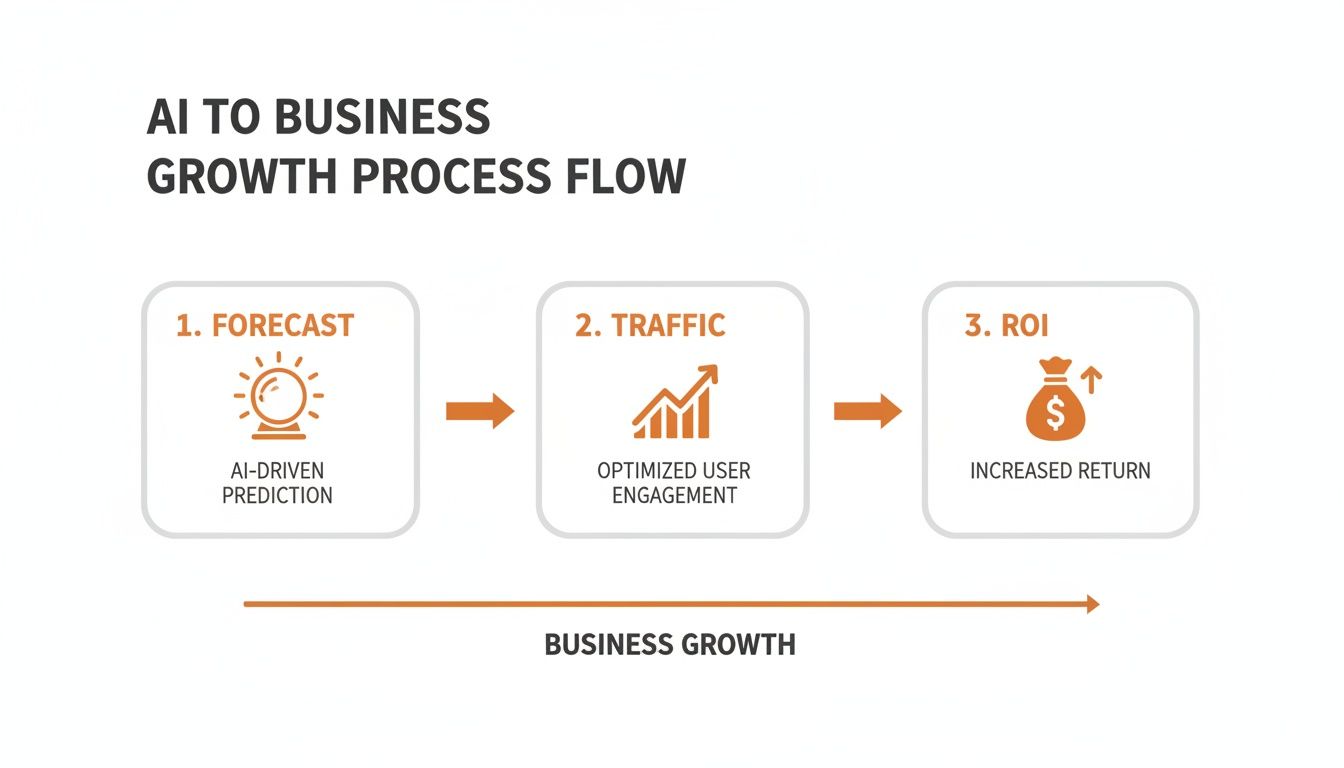
As you can see, there’s a clear line from predictive analysis to tangible financial results. It’s what makes these tools so practical.
The real goal here is to get past the simple up-or-down mentality of traditional rank tracking. An AI-driven alert should make you ask, “Why did this happen, and what should we do next?”
To get the complete picture, the final piece of the puzzle is connecting this data with your other analytics platforms, like Google Analytics 4. When you can correlate a shift in SERP visibility with on-site behaviour—like a dip in conversion rates or a spike in user engagement—you unlock a much deeper level of understanding. For a refresher on the basics, our guide on how to track keyword rankings is a great starting point. This holistic view is what elevates AI rank tracking from a simple monitoring tool to a core component of your growth strategy.
Gaining an Edge in Competitive Niche Markets
When you’re working in a highly specialized or regulated industry, the standard SEO playbook just doesn’t cut it. Think about businesses in sectors like cannabis, CBD, or holistic health—they’re constantly juggling compliance rules and trying to meet hyper-specific customer needs. This is where a smarter AI rank tracking approach isn’t just helpful; it becomes a serious competitive advantage.
Traditional SEO tools often miss the boat on the unique language and search habits in these niches. A generic tool might not see the subtle but crucial difference between searches for “holistic anxiety relief” and “natural remedies for stress.” An AI-powered system, on the other hand, is designed to grasp this semantic context, uncovering valuable long-tail keywords that your competitors are completely ignoring.
This is how you find—and own—a space where others can’t effectively compete.
Navigating Regulatory and Regional Nuances
For any industry facing strict advertising rules, organic search is an absolute lifeline. AI rank tracking delivers the granular intelligence you need to operate both safely and effectively.
It can keep an eye on SERP features tied to compliance-related queries, giving you a clear picture of how information is being shown to users. Imagine a CBD e-commerce brand wanting to rank for sensitive terms. They can analyze what kind of content—educational blog posts versus direct product pages—is actually winning in the search results, ensuring their strategy matches what search engines deem appropriate.
AI doesn’t just show you where you rank; it reveals the type of digital footprint that succeeds in a complex market. It helps you build a strategy that is not only visible but also compliant and authoritative.
On top of that, AI tools are brilliant at spotting unique regional search trends. A holistic clinic in Vancouver might discover that searches for “acupuncture for seasonal affective disorder” skyrocket in their area during the winter. Armed with this hyper-local insight, they can create perfectly timed, targeted content that connects with their community and brings in qualified leads.
Uncovering Hidden Pockets of Opportunity
The real magic of AI rank tracking in niche markets is its ability to see what everyone else misses. It can track your brand’s visibility across specialized forums, niche blogs, and other community hubs where your ideal audience is already spending their time.
This goes way beyond measuring traditional domain authority. Instead, the focus shifts to topical relevance within a very specific ecosystem.
- Example for a CBD Brand: An AI tool flags an emerging long-tail keyword: “best CBD oil for pet separation anxiety Canada.” The brand can jump on this, quickly creating an in-depth guide that targets this precise need and captures highly motivated traffic before bigger competitors even realize it’s a trend.
- Example for a Holistic Clinic: The system detects that a local wellness forum is sending a ton of referral traffic to a competitor. This insight gives the clinic a clear action item: engage with that community, build trust, and establish authority right where potential clients are actively looking for advice.
By blending broad SERP analysis with this kind of deep, niche-specific intelligence, you can build an SEO strategy that’s both resilient and incredibly effective. This turns AI rank tracking from a simple monitoring tool into your secret weapon for dominating tough markets.
Future-Proofing Your SEO Strategy with AI
Bringing AI rank tracking into your workflow isn’t just about getting a new tool. Think of it as a fundamental upgrade to how you approach search, a way to make your business resilient in a constantly shifting digital space. This isn’t just another isolated piece of software; it’s more like the central nervous system for a smarter, more connected intelligence network. It provides the crucial data that fuels every other part of your digital marketing, turning separate activities into a single, proactive system for growth.
Imagine your SEO data automatically feeding your AI content creation tools, pointing out content gaps before you even know they’re there. What if your rank predictions could steer your programmatic SEO, helping you scale content creation for thousands of long-tail keywords without manual guesswork? This is the kind of integration that changes the game, moving your marketing from a collection of disjointed campaigns to one intelligent operation that’s always learning and adapting.
Embracing a Predictive Marketing Model
The real shift here is moving from being reactive to being predictive. Instead of scrambling after a performance drop, you can use AI to see what’s coming—whether it’s a shift in the market, a competitor’s next move, or the ongoing evolution of search itself, like new generative AI experiences. This puts you in a position to prepare for what’s next, not just clean up after what’s already happened.
AI rank tracking is your early warning system and opportunity radar rolled into one. It empowers you to stop chasing algorithms and start building a resilient strategy that thrives on change, ensuring sustainable growth for years to come.
Ultimately, this technology is what you need to lead, not just compete, in the next chapter of digital marketing. When you weave AI-driven insights into the very fabric of your strategy, you give your business the predictive edge needed to stay ahead of the curve. The best time to make this shift is now, so you can make sure your brand stays visible, relevant, and profitable, no matter what Google throws your way. Don’t just keep up with the future of SEO—start building it.
Common Questions About AI Rank Tracking
Jumping into a new way of measuring SEO performance always stirs up a few questions. Getting a handle on the practical side of AI rank tracking, from the cost to what it actually does in the real world, is the key to appreciating its value. Here are some of the most common questions we hear from business owners and marketing managers.
Is AI Rank Tracking More Expensive Than Traditional Tools?
At first glance, some AI platforms can look a bit pricier. But the real story isn’t about the upfront cost; it’s about the return on your investment. Traditional tools give you the basics—a list of where you rank. An AI-powered system, on the other hand, hands you predictive insights, finds opportunities you might have missed, and gives you a deep-dive into what your competitors are up to.
Think about all the hours you’d save on manual analysis and the costly strategic missteps you’d avoid. When you add it all up, most businesses find AI rank tracking provides a much bigger bang for their buck. It’s less of an expense and more of an investment in a smarter, proactive strategy.
How Does AI Rank Tracking Help With Local SEO?
For a local business, this technology is a complete game-changer. It doesn’t just look at simple keyword positions. It dissects hyperlocal search results, keeping an eye on your visibility in the Google Map Pack from one neighbourhood to the next and figuring out exactly what your local competitors are doing to get ahead.
Imagine an AI that can tell you what actually moves the needle for a local plumber versus a wellness clinic or a restaurant. It can pinpoint what’s working and give you concrete steps for optimizing your Google Business Profile to pull in more customers right from your own backyard.
This kind of detail means your marketing dollars are aimed squarely at the communities you want to reach.
Can AI Rank Tracking Predict Google Algorithm Updates?
Let’s be clear: no tool can predict a specific Google update with 100% certainty. But AI rank tracking is as close as you can get to having a crystal ball. Its machine learning models are designed to spot turbulence and weird patterns in the SERPs, which are often the first tremors before a big algorithm earthquake.
Here’s a peek at how it works:
- Early Warnings: The system can flag strange, widespread ranking shifts across your industry, giving you a valuable heads-up that something is coming.
- Strategic Resilience: Even more important is how it helps you build a solid SEO foundation. By keeping your focus on search intent and top-notch content—two things AI tools are brilliant at analyzing—you make your website more resilient.
This approach means you’re not just scrambling to react to updates; you’re building a strategy that’s strong enough to weather them from the start.
Ready to stop reacting and start predicting? Juiced Digital uses advanced AI to build future-ready SEO strategies that drive measurable growth. Discover your true visibility by booking a free consultation at https://juiceddigital.com today.